
Predicting the Critics’ Choice Awards: Head Over Heart, Every Time
Why loving a movie isn’t the same thing as predicting a winner.
January 3, 2026 | By Lisa Hatzenbeller
Awards season has a way of daring you to confuse taste with prediction. I love a lot of movies this year, and I’m rooting for plenty of performances, but that doesn’t automatically make them the right picks at the Critics’ Choice Awards. This article isn’t about manifesting wins or picking favorites. It’s about reading how critics actually vote, even when that means leaving my feelings at the door.
This is a Critics’ Choice predictions article, which means I’m focused on what I think will happen, not what I want to happen. If those were the same thing, the job would be much easier, and I’d also look like a terrible predictor by Sunday night. Everything below is built on patterns, history, and how this voting body tends to behave.
Loving a performance and predicting a win are two very different sports.
Best Picture–Director Alignment Is the Critics’ Choice Tell
With that framing in place, the clearest place to start is where Critics’ Choice usually shows its hand first: Best Picture and Best Director.
Best Picture
Predicted Winner: One Battle After Another
Over the last ten years, Critics’ Choice has matched Best Picture and Best Director 80% of the time. When critics rally around a film as the consensus favorite, they usually reward the film and the filmmaker together. Splits happen – but they’re the exception, not the rule.
That’s why, despite how much I admire Sinners, I’m not predicting it here. Sinners has passion, atmosphere, and a devoted response, but Critics’ Choice historically favors broad critical consensus when it comes to Best Picture.
One Battle After Another sits squarely in that consensus lane, widely respected, fully realized, and embraced across the board.
This doesn’t feel random. It reads as a voting body actively signaling broader taste, wider curiosity, and a growing willingness to look beyond traditional, studio-centered awards narratives.
Best Director
Predicted Winner: Paul Thomas Anderson (One Battle After Another)
Paul Thomas Anderson is no stranger to Critics’ Choice voters. He has been nominated repeatedly across Best Director, Best Adapted and Original Screenplay – and has never won.
In past split years, Critics’ Choice often had a structural reason to separate Picture and Director. In 2015, Spotlight won Best Picture while George Miller won Director for Mad Max: Fury Road – largely because Spotlight’s director, Tom McCarthy, wasn’t even nominated. In 2019, Once Upon a Time in Hollywood won Picture while Sam Mendes took Director for 1917, separating ensemble affection from technical achievement.
This year feels different. Anderson is nominated. His film is embraced. And when those two things align, Critics’ Choice tends to go all in. A win here could serve as an early precursor to Paul Thomas Anderson finally breaking his eleven–Oscar-nomination, no-win streak later in the season.
Why the Acting Races Are Wide Open
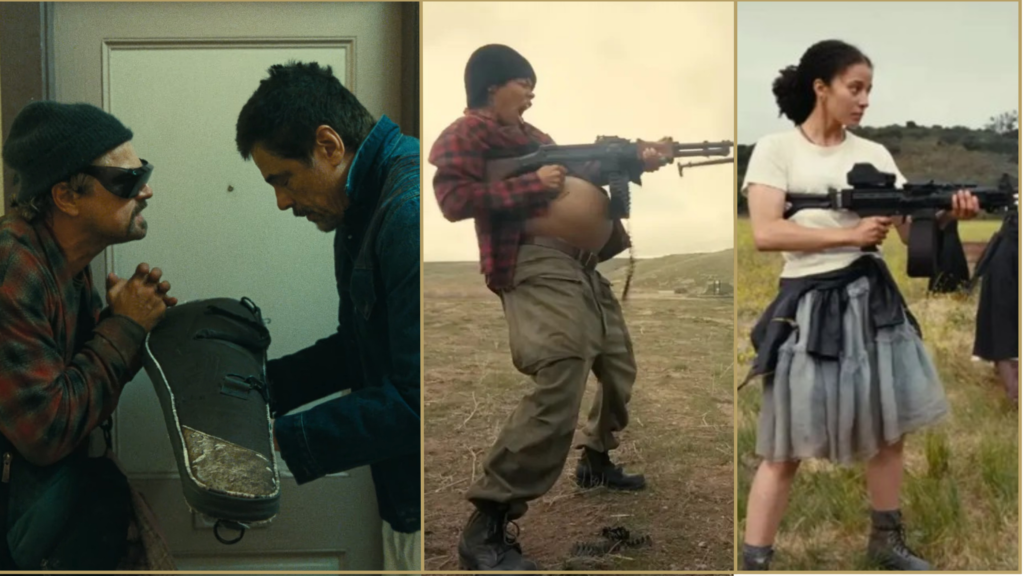
This year, it’s not just the supporting categories that feel volatile. Across lead and supporting performances alike, Critics’ Choice voters have more room than usual to make different arguments about momentum, career recognition, and craft. That makes the acting races less about locks and more about which narrative this group decides to prioritize in the moment.
Best Supporting Actress
Predicted Winner: Amy Madigan (Weapons)
If I were picking with my heart, I’d probably be riding the Ariana Grande wave a little harder here, and I still think she’s very much in the Oscar conversation. But this is a Critics’ Choice prediction, not a manifestation circle (as much as #GrandeOscarWin lives rent-free in my head).
Critics’ Choice tends to move earlier and reward performances critics have been steadily championing all season. That’s where Amy Madigan comes in, less about spectacle, more about craft.
There’s always room for an upset, particularly from Wunmi Mosaku in Sinners, but if I’m choosing accuracy over affection, Madigan is the pick that makes the most sense.
Best Supporting Actor
Predicted Winner: Benicio del Toro (One Battle After Another)
This is one of those supporting races where you can reasonably find smart people landing on different picks, which makes it one of the more fluid and interesting categories on the ballot. I believe Benicio del Toro has the edge here. Critics’ Choice has awarded him once before, for Traffic (2000), and this performance fits comfortably within the kind of supporting work this group responds to. It is controlled, impactful, and tied to a film that keeps dominating the season.
Stellan Skarsgård sits right behind him, and he is the clearest upset scenario. Sentimental Value has been part of the awards conversation since its Cannes premiere, and there is a real argument for critics wanting to finally recognize Skarsgård for a lifetime of work. The issue is momentum. As regional groups have started to weigh in, One Battle After Another has continued to gain ground while Sentimental Value has begun to falter.
As for Sean Penn, I do not see this being the moment. Critics’ Choice has already awarded him twice for Best Actor, for Mystic River (2003) and Milk (2008), and this is a supporting race. Historically, that combination makes a third win here feel unlikely.
If Critics’ Choice decides to go career-crowning, Skarsgård is the one to watch. If they stick to recent momentum and familiarity, del Toro is the safer pick. Either way, this is one of the supporting races worth watching closely.
Best Actress
Predicted Winner: Jessie Buckley (Hamnet)
In the larger awards conversation, this race has felt like a foregone conclusion. Jessie Buckley’s work in Hamnet has been positioned as the performance to beat all season long, and she remains the clear frontrunner for the Oscar and most major awards bodies.
Critics’ Choice is where things get a little more interesting. If there is any place where Buckley could be made to work for it, this is it. Rose Byrne has quietly been racking up wins with regional critics groups, and that kind of momentum matters more at Critics’ Choice than it sometimes does elsewhere.
I still think Buckley is the safest pick here. But if there is going to be a shake-up anywhere in the lead actress race, this would be the ceremony, and Byrne would be the one positioned to pull it off. This is less about weakness in Buckley’s case and more about Critics’ Choice occasionally rewarding the performance that peaks at exactly the right moment.
Best Actor
Predicted Winner: Michael B. Jordan (Sinners)
This is another acting race where the usual rules do not fully apply. Michael B. Jordan’s dual performance as Smoke and Stack in Sinners is the kind of showcase that Critics’ Choice often responds to, particularly when the ambition of the work is impossible to ignore.
Timothée Chalamet sits just behind him and remains the most obvious alternative. This marks his fourth Critics’ Choice acting nomination, and his consistency with this group keeps him firmly in the conversation.
Ethan Hawke is the kind of contender who could upset if the film breaks through late, but Blue Moon never received the kind of sustained pre-awards push from Sony Pictures Classics that typically carries a performance all the way here. Without that momentum, it is hard to see this being the place where he breaks through.
As for Wagner Moura, Critics’ Choice has historically been less receptive to foreign-language performances in lead acting categories. His nomination for The Secret Agent is notable on its own, especially considering this is his first film acting nomination from the group after prior recognition in television.
Leonardo DiCaprio remains the category’s most historically rewarded nominee, with eight Critics’ Choice acting nominations and two wins. That history matters, but it also underscores why this race is not a sure thing. DiCaprio is the only previous winner in the field, while this marks Jordan’s second Critics’ Choice acting nomination and Hawke’s third.
Taken together, this is a field filled with familiarity, ambition, and competing narratives. Jordan has the edge on performance and momentum, but the depth of prior Critics’ Choice recognition across the lineup makes this one of the least settled lead races on the ballot.
The Rest of the Ballot
These categories tend to be more straightforward, though a few longshots could still make things interesting.
After the acting races, this is where the ballot starts to stabilize. These categories still matter, and they often signal where critics are aligning around craft and storytelling rather than performance momentum. I’m starting here with Screenplay, because it’s usually the clearest window into how Critics’ Choice is thinking.
Best Adapted Screenplay
Predicted Winner: One Battle After Another
This feels like one of the steadier calls on the ballot. One Battle After Another has been embraced not just as a film, but as a piece of writing, and it is hard to deny Paul Thomas Anderson here when Critics’ Choice has already shown a willingness to reward the film across multiple categories.
Would I love to see a foreign-language film break through in this category, particularly No Other Choice out of South Korea? Absolutely. But Critics’ Choice has historically been cautious in Best Adapted Screenplay, and this does not feel like the year they buck that trend.
Best Original Screenplay
Predicted Winner: Sinners
There is no safer pick on this ballot. Best Original Screenplay is the category designed to reward voice, ambition, and authorship, and Sinners has dominated that conversation from the moment it premiered in April.
Its writing has been the film’s calling card all season, consistently cited by critics as the engine behind its impact. This is exactly the kind of original work Critics’ Choice tends to lock onto early and reward decisively.
Sorry, Baby deserves its recognition here, particularly for Eva Victor, and its nomination signals real respect for its voice. But respect is not the same thing as momentum, and this category does not feel remotely split.
If Critics’ Choice is making a statement about originality this year, Sinners is the statement.
Taken together, Best Adapted Screenplay and Best Original Screenplay feel unusually clear this year, with One Battle After Another and Sinners emerging as consensus choices in categories that rarely align this cleanly.
Best Ensemble / Casting
Predicted Winner: One Battle After Another
This is a pure head-over-heart pick. There is no denying how dominant One Battle After Another and Sinners have been with Critics’ Choice voters this year, with Sinners leading the field at seventeen nominations and One Battle After Another close behind with fourteen.
For that reason, I’m predicting One Battle After Another here, with Sinners close behind. Both films represent the kind of across-the-board support that Critics’ Choice tends to reward in Ensemble and Casting.
My heart would pick Wicked: For Good. But history gets in the way. Last year, Wicked led the nominations with eleven and still lost Ensemble to Conclave. If that didn’t push it over the line then, it’s hard to see it overtaking either of those now.
I’m ultimately giving the edge here to One Battle After Another for one specific reason: Critics’ Choice showed far stronger acting support for the film, with five acting nominations compared to Sinners’ two. In a category about how a cast functions together, that imbalance matters, and it gives One Battle After Another the edge.
Best Cinematography
Predicted Winner: Autumn Durald Arkapaw (Sinners)
This is a category where more than one film could make a legitimate case. Sinners and Train Dreams are both beautifully shot, and either would be an easy Critics’ Choice winner in a different year.
Ultimately, though, Sinners has the edge. Autumn Durald Arkapaw’s work is not just striking, it is formally ambitious in a way Critics’ Choice tends to respond to. The film made history as the first shot by a female director of photography on large-format IMAX film, and it pushed that ambition even further by blending IMAX photography with Panavision 70, marking the first time those two formats have been used together on a single feature.
Adolpho Veloso’s cinematography for Train Dreams is quietly stunning, and it would not be a shock to see critics reward its restraint and beauty. But when Critics’ Choice leans technical, they often lean bold, and this feels like the place where Sinners visual achievement is simply too hard to deny.
Best Editing
Predicted Winner: Andy Jurgensen (One Battle After Another)
Here, I’m following the precursor momentum. Editing tends to reward narrative control and precision, and One Battle After Another has consistently shown up in this category across the season.
Jurgensen’s work is invisible in the way Critics’ Choice often appreciates most, shaping tone and pacing without calling attention to itself. When the precursors line up like this, the group usually follows.
Best Production Design
Predicted Winner: Shane Vieau, Tamara Deverell (Frankenstein)
As much as I would love to see Wicked: For Good take this, history makes that outcome unlikely. Critics’ Choice already awarded Wicked in this category last year, and they are not typically inclined to repeat so quickly.
Frankenstein offers the kind of immersive, fully realized world-building this category exists to reward. Even with the affection for Wicked, this feels like the place where they spread the wealth.
Best Costume Design
Predicted Winner: Kate Howley (Frankenstein)
The logic here mirrors Production Design, but the case for Frankenstein stands on its own. The costumes do more than complement the sets, they actively shape the film’s tone and character, reinforcing its world without relying on spectacle.
That kind of integrated craftsmanship is exactly what this category exists to reward.
Best Makeup & Hairstyling
Predicted Winner: Mike Hill, Jordan Samuel, Cliona Furey (Frankenstein)
Given the scale and physical transformation required by Frankenstein, this feels like one of the clearer craft calls on the ballot. The work on the Creature in particular is central to the film’s impact, with makeup and hairstyling turning design into character rather than ornament.
The only real spoiler scenario would be The Smashing Machine, but that would require a late-breaking surge that has not materialized. In a year where Frankenstein dominates the craft conversation, this is the category where its impact feels hardest to deny.
Best Sound
Predicted Winner: Al Nelson, Gwendolyn Yates Whittle, Gary A. Rizzo, Juan Peralta, Gareth John (F1: The Movie)
There is no denying this one. F1: The Movie is built around speed, engines, and immersion, and the sound design is the engine that makes the whole thing work. If you’re making a racing movie starring Brad Pitt, this is the category you’re supposed to dominate.
This feels like the kind of technical win Critics’ Choice doesn’t overthink. The sound isn’t just loud, it’s precise, dynamic, and central to the experience. When a film’s identity is this tied to what you hear, the award tends to follow.
Best Score
Predicted Winner: Ludwig Göransson (Sinners)
In a film like Sinners, the music is the crux of the storytelling. The score is not background texture, it is the emotional engine of the film, shaping tension, rhythm, and atmosphere from the opening frames.
Ludwig Göransson’s work has been the most consistently praised element of Sinners since its release in April, and nothing else this season has come close to matching its impact. That sustained response matters. When a score remains part of the conversation this long, it usually wins.
This is one of those categories where momentum never wavered, and my pick never changed.
Best Original Song
Predicted Winner: “Last Time (I Seen the Sun)” (Sinners)
✍️ Alice Smith, Ludwig Göransson, Miles Caton
🎤 Miles Caton
For most of the season, the conversation around this category felt locked around “Golden” from K-pop Demon Hunters. It was the early favorite, the loudest presence, and the song everyone assumed would carry it through.
Lately, though, the momentum has shifted. “Last Time (I Seen the Sun)” has been steadily gaining ground, and it feels far more aligned with how critics tend to respond in this category. It’s not just catchy, it’s emotionally grounded, woven directly into the fabric of Sinners, and resonant in a way that lingers beyond the film itself.
My heart would love to see Stephen Schwartz take this for “The Girl in the Bubble” from Wicked: For Good. But that’s a heart pick, not a prediction. If I’m reading the room honestly, this feels like the moment where critics gravitate toward the song that carries weight rather than spectacle.
Best Visual Effects
Predicted Winner: Joe Letteri, Richard Baneham, Eric Saindon, Daniel Barrett (Avatar: Fire and Ash)
Visual Effects and Avatar remain one of the most reliable combinations in awards season, and this year does not feel like the moment that changes. Even with Critics’ Choice already awarding Avatar and Avatar: The Way of Water in this category, the franchise’s technical dominance is difficult to ignore.
Fire and Ash once again pushes scale, realism, and immersion in ways few films can match. At three hours and seventeen minutes, it is the kind of film that lives or dies on its visuals, and here they do the heavy lifting, keeping the experience engaging through sheer technical ambition. When this series shows up in Visual Effects, it tends to win, and this feels like another case where Critics’ Choice follows the obvious technical achievement.
Best Stunt Design
Predicted Winner: Wade Eastwood (Mission: Impossible – The Final Reckoning)
Stunts and Mission: Impossible have always gone hand in hand, and this entry feels like the clearest lock in the category. The film delivers large-scale work across land, air, and sea, pushing physical execution in every direction. With this marking the final chapter of the franchise, it also carries the kind of legacy weight critics often respond to when honoring stunt work.
Best Animated Feature
Predicted Winner: K-pop Demon Hunters
This feels like a classic Critics’ Choice call. While Zootopia 2 is the bigger studio title, critics often lean toward originality and cultural impact in this category, and K-pop Demon Hunters has been the animated film that dominated conversation throughout the season.
Its success as an independent Netflix hit gives it an edge with critics looking to reward something that feels fresh rather than familiar.
Best Foreign Language Film
Predicted Winner: No Other Choice
This is one of the tighter races on the ballot. Jafar Panahi’s It Was Just an Accident comes in right behind for me, carried by a powerful personal and political narrative that makes it an undeniable contender.
Where No Other Choice ultimately pulls ahead is in how directly it speaks to the present moment. Park Chan-wook’s dark comedy takes on unemployment, job insecurity, and economic anxiety with a sharpness that feels especially relevant right now, and critics have consistently engaged with the film on those terms throughout the season.
That subject matter resonates with me personally, having been laid off after twenty years in a corporate career, but more importantly, it aligns with the kind of contemporary urgency Critics’ Choice often responds to in this category. Panahi’s story is compelling, but this feels like the moment where immediacy and relevance give No Other Choice the edge.
Best Comedy
Predicted Winner: The Naked Gun
Following consensus is sometimes the smartest move, and that is the case here. The Naked Gun has emerged as the critics’ favorite in this category, carrying momentum that makes it difficult to bet against.
Personally, my pick would be The Phoenician Scheme which I found genuinely hilarious. But this is a prediction, not a personal ballot, and The Naked Gun is where critics appear to be landing.
Best Young Actor / Actress
Predicted Winner: Miles Caton (Sinners)
This is Caton’s first film role, and he absolutely announces himself. Between the performance itself and his singing, he consistently commands attention, often holding his own or outright standing out even when sharing the screen with far more established actors.
What makes this feel decisive is not just visibility, but impact. Caton isn’t being singled out because he’s young, he’s being singled out because his work lands. In a category designed to recognize a true breakout, this feels like the clearest expression of that idea this season.
Final Thoughts
This is the first major awards show of the season, which makes these results more than just an early trophy haul. Critics’ Choice often sets the tone for what follows, revealing where consensus is already forming and where resistance might still be brewing as the season unfolds.
Just as importantly, these wins and acceptance speeches function as a kind of early audition for the Oscars. They shape narratives, signal momentum, and tell us which performances and films are beginning to feel inevitable, and which ones still have work to do.
I’ll have a post-ceremony follow-up breaking down the wins, surprises, and what actually matters heading into Oscars season. Head over heart gets you through predictions. Chaos is what makes awards season fun.
Want the full picture?
For the complete breakdown beyond this article:
View full Critics’ Choice nominations
View my full Critics’ Choice predictions
How to watch
The 31st annual Critics’ Choice Awards will air Sunday, January 4, 2026, from 7:00–10:00 PM ET on E! and USA Network.