
Recasting Oscar History: Introduction
What If the Academy Had Always Awarded Best Casting?
June 2, 2026 | Lisa Hatzenbeller
Casting sits at the center of every great film. Before audiences fall in love with a character, before a performance becomes iconic, and before an actor takes the stage on Oscar night, someone has to answer a simple question:
Who should play the role?
Casting directors help guide the entire project. They identify talent, recommend performers, and help filmmakers build ensembles capable of bringing a story to life. Whether pairing established stars with newcomers or helping define career-changing roles, their influence can be found in cinema’s most memorable films. Yet despite that influence, casting remained absent from the Academy Awards.
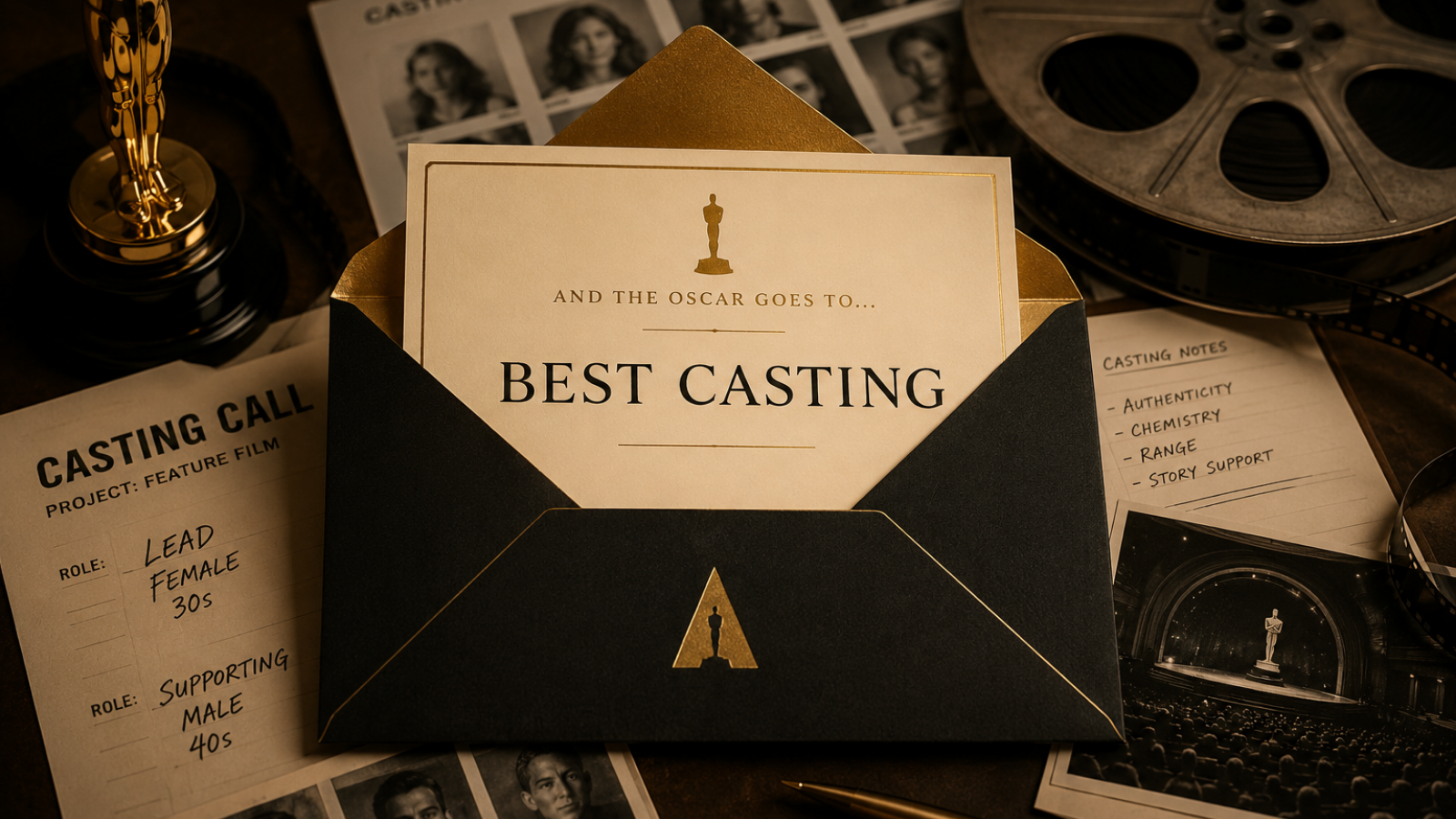
That changed this year at the 98th Academy Awards, when the Academy presented its first Oscar for Achievement in Casting. It finally gave long-overdue recognition to one of the most important aspects of filmmaking. The new category also raises an intriguing question: If this award had existed throughout Oscar history, which films would have been nominated, and which film would have won?
That question inspired Recasting Oscar History, a series that revisits past Oscar ceremonies and explores how a Best Casting race might have unfolded.
What is Casting?
The Academy has recognized acting since the very first Academy Awards, yet unlike acting or editing, casting is difficult to separate from the finished film. We walk out of theaters remembering the performance, but the work that brought the performer to the screen often disappears when the credits roll. When casting works well, we don’t even think about it. It all feels effortless.
Casting directors were not always a formal part of the filmmaking process. During Hollywood’s studio era, many actors worked under long-term contracts and were often assigned to projects by the studios that employed them. While producers and directors still made key casting choices, the profession we recognize today had not yet fully emerged.
That began to change as the studio system declined in the mid-20th century. Filmmakers suddenly had access to a wider range of talent, creating a need for specialists who could identify talent, build ensembles, and connect the right actors with the right roles. Casting directors became creative partners, helping define films long before production began.
Their responsibilities extend far beyond filling a list of characters. They actively look for new talent through auditions, industry relationships, and non-traditional paths like social media. They evaluate chemistry between performers, balance established stars with emerging actors, and help filmmakers assemble casts that become unforgettable. In many cases, they introduce viewers to performers who later become household names.
Even after its first award was presented to Cassandra Kulukundis for One Battle After Another, there is still confusion about what the category actually recognizes. Unlike acting categories, Best Casting is not focused on individual performances. While ensemble chemistry may influence the conversation, this is not an ensemble award. Instead, it recognizes the creative and strategic work that goes into selecting, balancing, and building a cast.
How This Series Works
Rather than moving through Oscar history in numerical order, this series will jump between ceremonies, eras, and races that offer particularly interesting casting conversations. One week may revisit a classic Hollywood showdown, while the next may examine a recent Best Picture field.
Each nominee will be evaluated using factors such as cast composition, ensemble chemistry, acting recognition, cast depth, the balance between established stars and newcomers, notable breakout performers, and the film’s overall Oscar performance. No factor determines the outcome on its own, and no statistic automatically guarantees a win. The field will then be ranked to determine which film presents the strongest case for Best Casting recognition.
To keep the project focused, we begin with that year’s Best Picture nominees. In years with five Best Picture nominees, those films will automatically make up the Best Casting field. In years with more than five Best Picture nominees, the five films with the most Oscar nominations will become the Best Casting nominees. If a tiebreaker is needed, priority will be given to the film with the most nominations in the Above-the-Line categories.
A film with the most acting nominations will not automatically win. Likewise, a Best Picture winner does not automatically become the Best Casting winner. Awards recognition and star power may shape the conversation, but they do not decide the outcome.
Final Thoughts
Once the nominees are set, the real debate begins. Some races may have a clear frontrunner. Others may feature several films with a legitimate claim to the award.
That’s part of what makes Oscar history so fascinating. Decades after the awards are handed out, people still disagree about who should have won. Recasting Oscar History continues that tradition by revisiting Best Picture lineups and asking a question the Academy never had the opportunity to answer.
You may agree with the rankings. You may think I got them completely wrong. Either way, the conversation begins now.
Explore Recasting Oscar History and see how Oscar history changes one ceremony at a time
Follow Oscar Obsessed ADHD
For data, chaos, and heart in every award season.
YouTube | Instagram | X