
Recasting Oscar History – April 1930
Who would have won Best Casting at the 2nd Academy Awards?
June 14, 2026 | Lisa Hatzenbeller
The second Academy Awards arrived as Hollywood was learning to cast not only faces, but voices. In this Recasting Oscar History exercise, the imagined Best Casting category becomes a question of transition: which film used performers most effectively to make early sound cinema feel exciting, legible, and commercially alive? The lineup spans a backstage musical, a gangster drama, a western talkie, a studio revue, and a silent historical drama, each built around a distinct casting challenge.
The ceremony also comes with a major historical wrinkle: these were not official nominations in the modern sense. The Academy did not announce nominees, issue nomination certificates, or name runners-up. Only the winners were revealed at the April 3, 1930 banquet. The additional names now listed in each category come from Academy in-house records showing which titles were under consideration by the judging boards.
For this project, we imagine how the Academy might have answered a Best Casting question within that recorded field. The 2nd Academy Awards honored films released between August 1, 1928, and July 31, 1929. Because the documented Outstanding Picture field contains exactly five titles, all five move directly into this alternate Best Casting race.
Outstanding Picture Nominees
Alibi
Total Oscars: 0 Wins • 3 Nominations
Acting Oscars: 0 Wins • 1 Nomination
The Broadway Melody*
Total Oscars: 1 Win • 3 Nominations
Acting Oscars: 0 Wins • 1 Nomination
The Hollywood Revue of 1929
Total Oscars: 0 Wins • 1 Nomination
Acting Oscars: 0 Wins • 0 Nominations
In Old Arizona
Total Oscars: 1 Win • 5 Nominations
Acting Oscars: 1 Win • 1 Nomination
The Patriot
Total Oscars: 1 Win • 5 Nominations
Acting Oscars: 0 Wins • 1 Nomination
* Indicates winner in the Outstanding Picture category
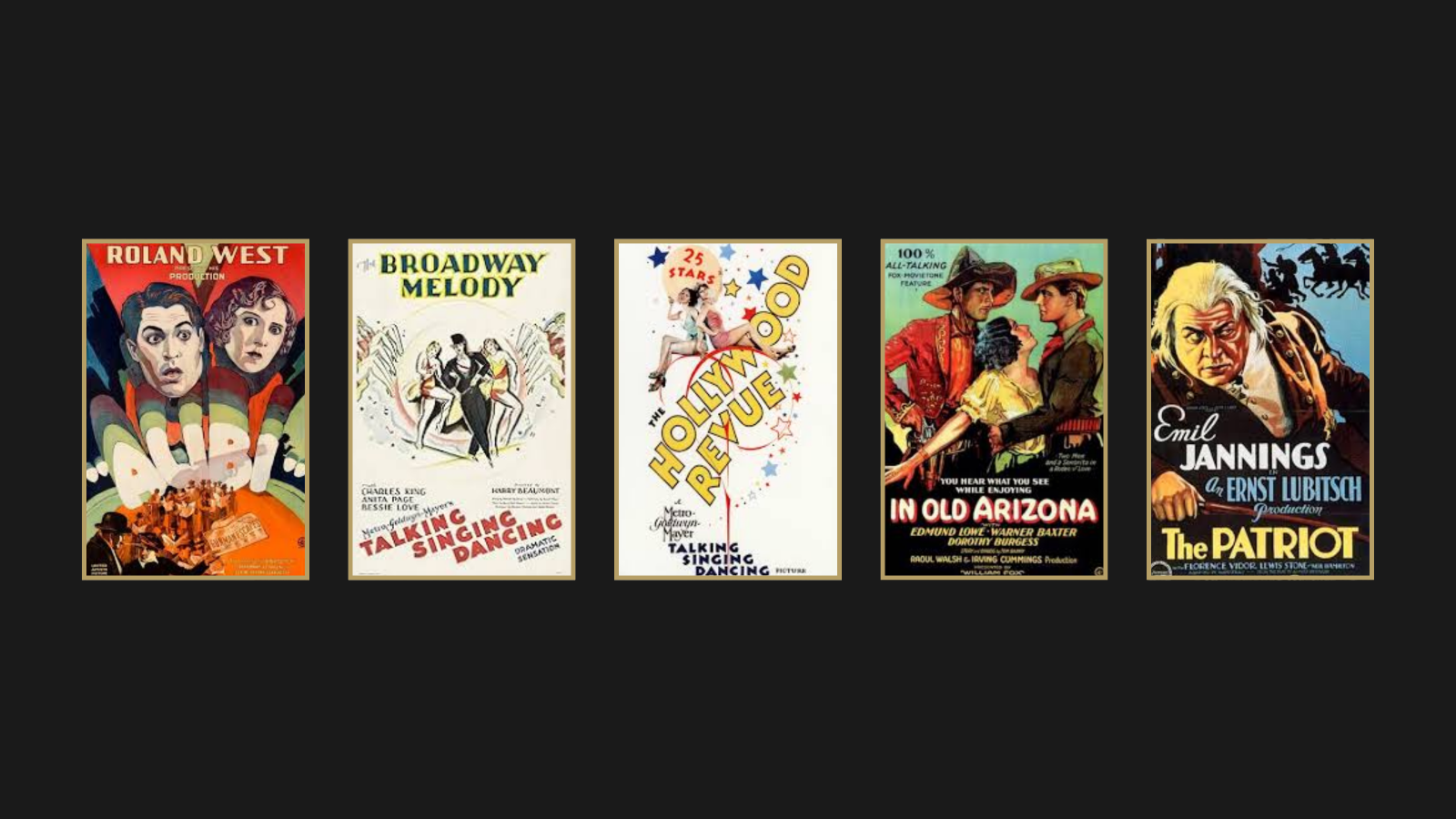
Who Would Have Won?
The films below are ranked through the Best Casting lens, weighing ensemble construction, casting difficulty, breakout value, chemistry, role-to-performer fit, and how strongly the cast shapes the film’s identity.
5ᵗʰ Place
Alibi
Key Cast: Chester Morris, Mae Busch, Harry Stubbs, Eleanor Griffith, Regis Toomey, Purnell Pratt
Casting Evaluation
This is blunt, purposeful placement: a dangerous young lead, a harder-edged female counterweight, and authority figures who keep the pressure direct. The choices are not especially intricate, but they suit a world of accusation, loyalty, intimidation, and pursuit.
Why This Casting Worked
- Chester Morris gives the film its strongest spark, bringing the vocal attack and physical confidence early sound needed.
- Mae Busch adds toughness and unsentimental glamour, preventing the criminal world from feeling too polished.
- Harry Stubbs adds reliable character support, filling out the ensemble with a practical, unshowy presence.
- Eleanor Griffith softens the tension without making the romantic element feel overly polished.
- Regis Toomey and Purnell Pratt bring steadiness and authority, grounding the law-and-order material.
Where the Casting Fell Short
The ensemble rarely complicates the world it establishes. The roles are clearly placed, but few add unexpected texture beyond the main conflict.
Casting Takeaway
Built for blunt impact, the cast gives the film a forceful center and enough surrounding pressure to hold the conflict in place.
4ᵗʰ Place
In Old Arizona
Key Cast: Warner Baxter, Edmund Lowe, Dorothy Burgess, Henry Armetta, J. Farrell MacDonald
Casting Evaluation
The casting has to enliven a simple chase-and-romance structure through personality rather than plot complexity. Its strongest move is building the film around a performer who can make the outlaw charming, vain, comic, and dangerous at once. The result is memorable but uneven: one role is boldly defined, while the rest mainly keep the pursuit and romantic conflict in motion.
Why This Casting Worked
- Warner Baxter brings roguish charm, vocal color, and teasing self-regard, making the outlaw more than a stock bandit.
- Edmund Lowe supplies a grounded lawman presence, giving the pursuit side firmness without competing for attention.
- Dorothy Burgess adds sensual volatility, making desire and betrayal central to the film’s tension.
- Henry Armetta brings comic seasoning without overwhelming the central conflict.
- J. Farrell MacDonald gives the setting a sturdy character-actor texture.
Where the Casting Fell Short
The supporting roles lack the individuality needed to make the world feel fully populated. Most of the casting interest remains concentrated around the central outlaw figure.
Casting Takeaway
One flamboyant star turn sets the temperature, while the surrounding cast keeps the chase, desire, and danger clear.
3ʳᵈ Place
The Broadway Melody
Key Cast: Bessie Love, Anita Page, Charles King, Jed Prouty, Kenneth Thomson, Mary Doran
Casting Evaluation
The strongest case comes through contrast. One sister carries experience, professional strain, and disappointment; the other brings freshness, glamour, and romantic susceptibility. Around them, the supporting players add musical ease, adult practicality, and a sense that ambition can be both thrilling and humiliating. It is not a large ensemble achievement, but the central pairing makes performance, romance, and disappointment feel connected.
Why This Casting Worked
- Bessie Love brings alertness, hurt, and professional drive, making the older sister’s disappointment active rather than merely pathetic.
- Anita Page supplies youthful glamour and softness, making the younger sister’s appeal immediately understandable.
- Charles King’s musical ease gives the romantic scenes a smoother performance rhythm against the film’s sharper professional tensions.
- Mary Doran adds a brighter spark around the principal relationships, widening the social texture without pulling focus.
- Jed Prouty adds practical theatrical authority, giving the supporting cast an older, steadier presence beyond the younger performers.
Where the Casting Fell Short
The outer roles offer limited surprise or depth beyond the main emotional and musical setup. Once the leads define the conflict, the remaining cast mostly keeps the machinery moving.
Casting Takeaway
The sister pairing gives the film its casting spine, turning performance, romance, and disappointment into one connected emotional problem.
Runner-Up
The Hollywood Revue of 1929
Key Cast: Conrad Nagel, Jack Benny, Joan Crawford, Buster Keaton, Marion Davies, Norma Shearer, Laurel and Hardy
Casting Evaluation
This is the ceremony’s clearest roster-casting achievement. The challenge is not character depth but arrangement: hosts, comics, dancers, glamour figures, musical performers, and specialty acts must register as varied without becoming shapeless. The selections create a strong sense of studio abundance, with different performer types placed to give the revue rhythm, novelty, polish, and comic relief.
Why This Casting Worked
- Conrad Nagel gives the film a controlled host presence, helping the revue feel organized rather than assembled at random.
- Jack Benny brings comic ease and live-entertainment rhythm, suiting the stop-and-start variety format.
- Joan Crawford adds dance energy and youthful glamour, giving the roster a different charge from the more formal prestige names.
- Buster Keaton brings silent-comedy distinction, making his inclusion feel like performer contrast rather than star padding.
- Marion Davies adds brightness and comic lightness, widening the tonal range of the studio display.
- Norma Shearer contributes polished prestige, reinforcing the revue’s top-tier studio presentation.
- Laurel and Hardy bring an immediately clear comic pairing, giving the film one of its most efficient specialty attractions.
Where the Casting Fell Short
The revue format limits interaction. Many performers register as individual attractions rather than parts of a developing ensemble.
Casting Takeaway
The achievement lies in selection: recognizable talents arranged to make the revue look versatile, confident, and well-stocked.
Winner
The Patriot
Key Cast: Emil Jannings, Lewis Stone, Florence Vidor, Vera Voronina, Neil Hamilton, Harry Cording
Casting Evaluation
The casting depends on performers who can make hierarchy feel dangerous. The cast must communicate rank, fear, calculation, vanity, and vulnerability inside a formal setting where tension emerges through posture, restraint, and shifts in control. Its achievement is turning the palace into a charged social order, not merely filling it with prestige names.
Why This Casting Worked
- Emil Jannings brings imposing stature and emotional excess, making royal power feel unstable rather than merely grand.
- Lewis Stone gives the film restraint and political intelligence, sharpening the drama through stillness instead of volume.
- Florence Vidor adds aristocratic poise, helping the court scenes feel socially elevated and tightly controlled.
- Vera Voronina brings a more exposed emotional quality, giving the intrigue a personal cost.
- Neil Hamilton supplies youthful polish, keeping the succession element present rather than abstract.
- Harry Cording adds a harsher physical presence, giving the margins of the story a trace of menace.
Where the Casting Fell Short
Some outer roles remain more atmospheric than individually memorable. The casting power is concentrated in the main opposing forces and the courtly tension around them.
Casting Takeaway
A controlled, high-pressure ensemble turns status, fear, elegance, and instability into the film’s strongest dramatic language.
Final Verdict
The Recasting Oscar History winner for the 2nd Academy Awards is The Patriot.
The Hollywood Revue of 1929 offers the strongest counterargument, turning MGM’s roster into a purposeful display of range, novelty, and studio confidence. The Broadway Melody remains a credible challenger because its performers give the musical’s ambitions, romances, and disappointments a clear emotional shape. In the end, The Patriot wins because its cast is most fully integrated into the drama, turning rank, suspicion, command, weakness, and political danger into a controlled ensemble design.