
“Obsession”
Spoiler-Free Review
July 22, 2026 | Lisa Hatzenbeller

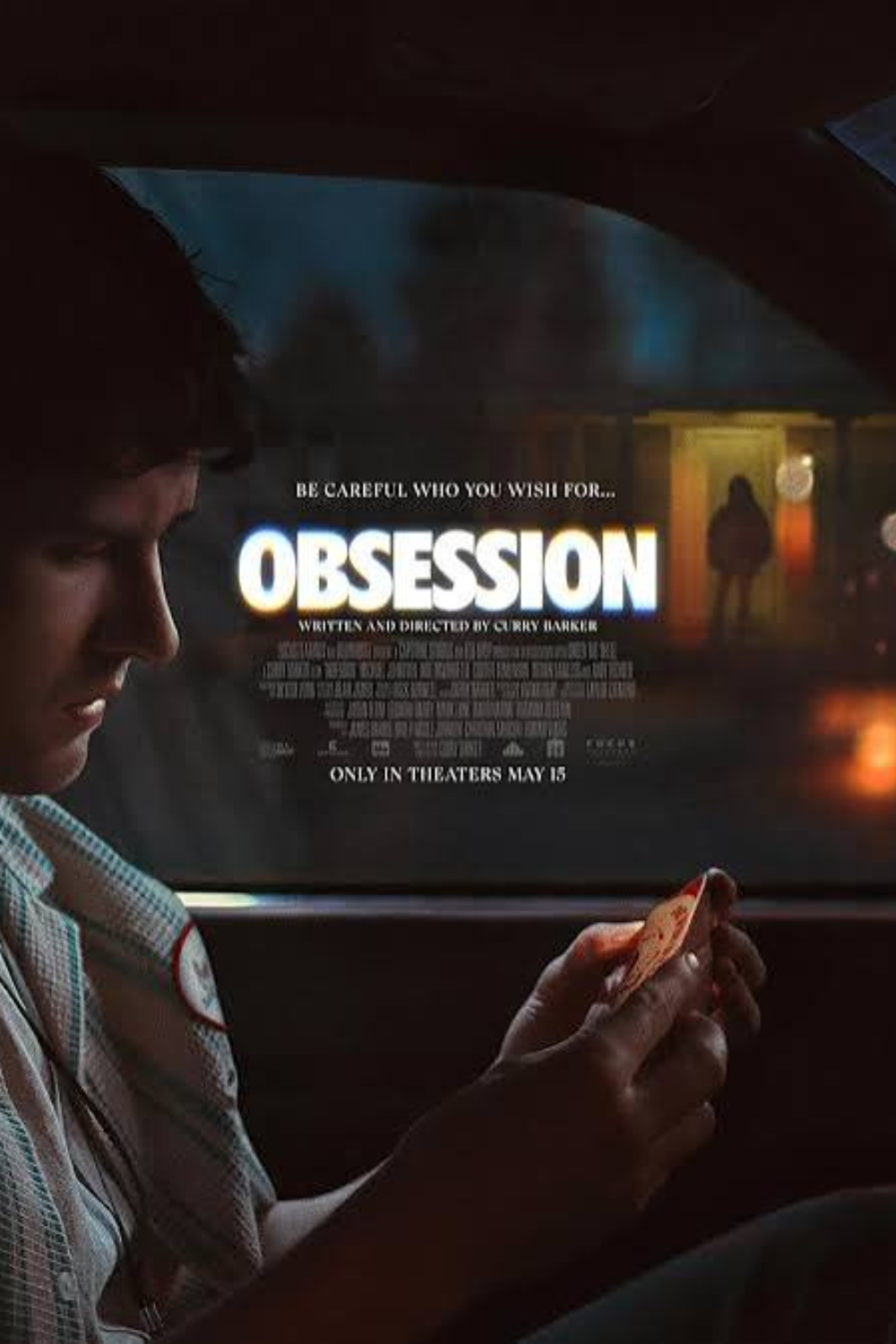
Premise: Baron “Bear” Bailey breaks a novelty charm to force his co-worker Nikki Freeman to love him, but the supernatural compulsion warps her mind into violent obsession, trapping him in a nightmare he cannot wish away.
Genres: Horror, Thriller, and Romance
Runtime: 108 minutes
MPAA Rating: R
Release Year: 2025
Starring: Michael Johnston, Megan Lawless, Inde Navarrette, and Cooper Tomlinson
Directed by: Curry Barker
Written by: Curry Barker
Distributed by: Focus Features
We’ve all wondered what we’d wish for if we were guaranteed one wish. More money. A dream job. True love. But Curry Barker’s Obsession asks a far more unsettling question: what if you actually got exactly what you wished for…and discovered it was the worst thing that could happen?
That simple idea becomes the foundation for a psychological thriller that is far more interested in getting inside your head than making you jump out of your seat. Obsession takes the fantasy of finally being loved by the person you want and pushes it beyond romance, affection, and devotion until love becomes something suffocating and dangerous. By the time the wish takes full effect, the movie is no longer asking whether Bear will get the girl. It is asking whether either of them can survive what he has done.
One final warning before we move on: as someone who adores my cats, Sprout and Dak, I feel obligated to tell my fellow cat lovers to proceed with caution. Take a breath, hug your cat afterward, and then we can talk about everything else Obsession gets right.
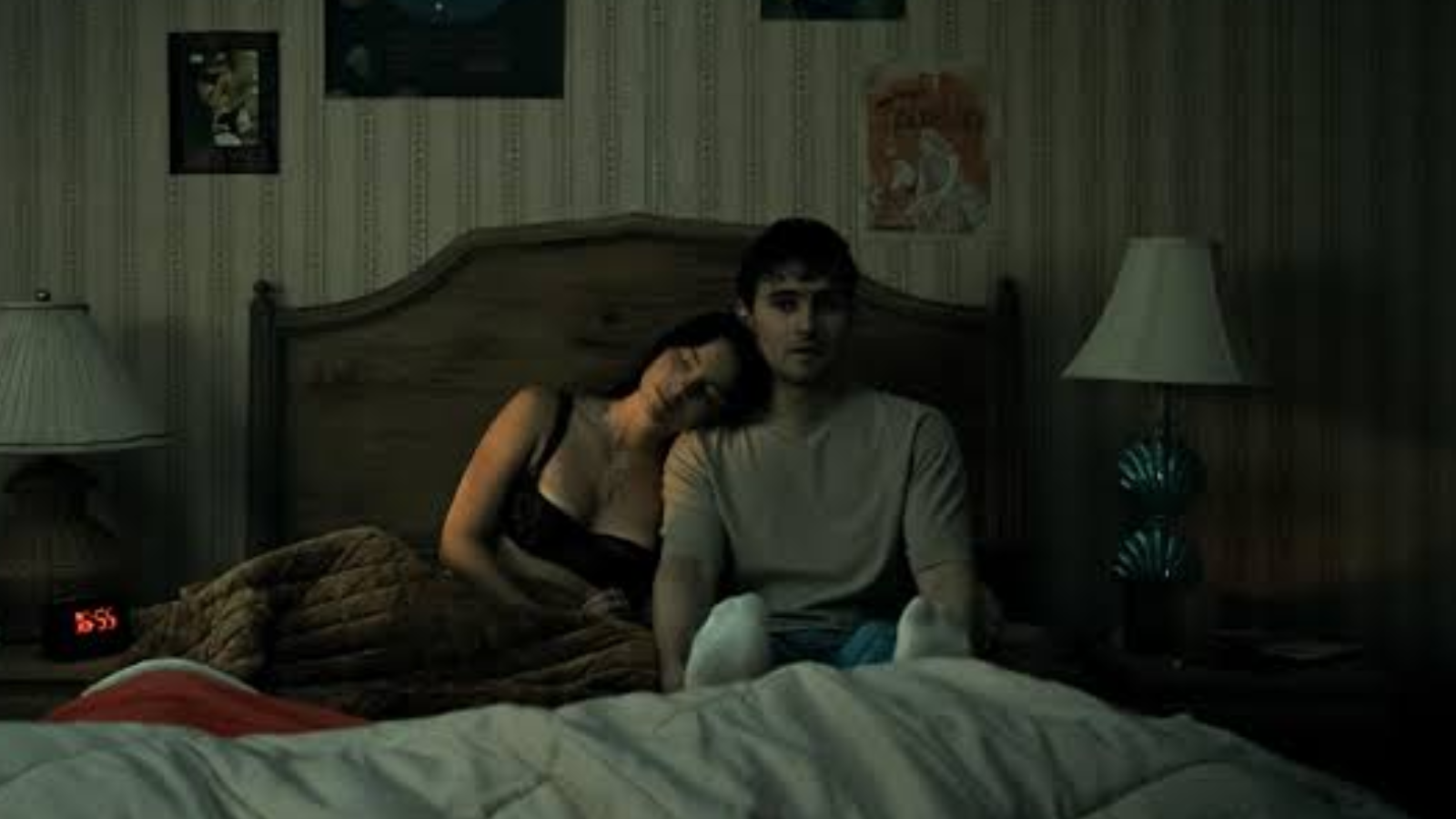
Love Turned Into Possession
The movie’s title leaves little doubt about where Nikki’s feelings are headed, but Barker still finds ways to make the escalation unpredictable. Her love does not merely become intense. It becomes possessive, all-consuming, and so detached from Nikki’s normal personality that it begins to feel as though something else has taken control of her body.
What makes Obsession work so well is that its central concept is rooted in something almost everyone has considered. We have all imagined what we would ask for if someone handed us a guaranteed wish, and most of us would probably choose something connected to money, success, security, or love. Barker takes that universal fantasy and exposes the danger hiding inside it, especially when the wish attempts to control another person rather than change the person making it.
Bear believes he is wishing for love, but what he is really asking for is certainty. He wants Nikki without facing rejection, vulnerability, or the possibility that she may not feel the same way. That gives the movie more depth than a simple story about a magical object gone wrong because the horror begins with Bear’s refusal to accept that real love requires another person’s choice. His wish removes that choice from Nikki, and the film gradually forces him to face the consequences of what initially seemed like a harmless shortcut.
The movie also keeps your attention because it continually makes you wonder where the situation can possibly go next. Nikki’s obsession grows scene by scene, but Barker does not reveal all of its limits at once. Every time Bear thinks he understands how deeply the wish has affected her, she does something even more extreme. That escalation creates the film’s tension and makes it difficult to imagine how the story could end without destroying both of them.
Inde Navarrette Takes Over the Film
Inde Navarrette gives the performance that makes the entire movie work. She takes Nikki from a familiar, grounded friend into someone whose emotions and behavior no longer seem fully connected to the person she was before Bear’s wish. The transformation never feels like a simple personality shift because Navarrette shows how completely the obsession has taken control of Nikki’s attention, instincts, and sense of reality. Even as the behavior becomes more extreme, she keeps enough of Nikki’s vulnerability visible to remind us that this is happening to her, not because of her.
Her physical performance is what makes that transformation especially unsettling. The way she holds her body, changes her voice, fixes her eyes on Bear, and moves through a room makes Nikki feel as though she is operating outside herself. At times, she becomes unnaturally still and calm, while in other moments the obsession erupts through panic, desperation, or overwhelming intensity. Navarrette commits so completely to those shifts that Nikki remains unpredictable without ever feeling random.
There are moments when her performance carries the unnerving energy of Smile, particularly when Nikki’s expression seems disconnected from what the moment should emotionally require. The film’s Blumhouse connection may also bring M3GAN to mind because both stories explore devotion becoming dangerous once it loses all boundaries. Still, Navarrette never feels like she is imitating either film or performance. She creates something specific to Nikki, making the obsession feel less like an outside creature and more like a wish that has rewritten every part of who she is.
What makes the performance so effective is that Nikki is frightening and heartbreaking at the same time. Bear is the one who makes the wish, but Nikki is the person who loses control over her emotions, relationships, ambitions, and ability to choose what she wants. The brief moments when her real self seems to break through make the situation even more disturbing because they suggest she is still aware of what is happening somewhere beneath the obsession. Navarrette understands that tragedy and gives the role far more emotional weight than the film’s wild premise might initially suggest.
The Damage Spreads
Michael Johnston has the less explosive role, but his performance is essential because Bear becomes the audience’s way into the growing nightmare. He begins as a shy, sweet, and emotionally awkward man who genuinely believes that being with Nikki would solve the biggest problem in his life. Johnston captures Bear’s early excitement without making him seem immediately sinister, which allows the consequences of the wish to develop gradually rather than turning the story into a punishment for an obviously terrible person.
As Nikki’s behavior becomes more extreme, Bear’s fear grows more palpable. Johnston’s facial expressions often reveal the exact moment when affection becomes discomfort or when discomfort becomes terror. He also has to balance Bear’s guilt with his instinct for self-preservation because he knows Nikki’s condition exists because of him, yet he is increasingly afraid of what she might do. That conflict gives Bear more complexity than the standard horror protagonist who simply needs to escape a dangerous person.
The wish also damages the friendships Bear and Nikki share with Sarah and Ian, played by Megan Lawless and Cooper Tomlinson. All four characters work together at Sarah’s family music store, which gives the film a believable sense of shared history and establishes that Bear and Nikki had an entire social world before the wish changed everything. As Nikki becomes more possessive, those friendships begin to look like threats because anyone who takes Bear’s attention away from her becomes someone standing between Nikki and the only thing she now values.
🧠ADHD Watch Factor
Pacing: Steady – Builds tension without ever feeling rushed
Attention Hold: Locked In – Nikki’s unpredictability keeps you fully engaged
Emotional Pull: Growing – Nikki’s trapped humanity deepens the concern
Chaos Level: Spiraling – Every interaction becomes more unsettling
Sarah and Ian are important because they can see the transformation from the outside. Bear spends part of the film trying to process whether Nikki’s behavior is flattering, strange, or genuinely dangerous, while their friends recognize much sooner that something is deeply wrong. Their reactions also help ground some of the movie’s increasingly wild situations because they respond the way ordinary people would when a close friend suddenly begins behaving like a completely different person. I would have liked more development of Nikki’s individual relationships with both of them, but they still help show how far the consequences of Bear’s wish extend beyond the central couple.
Curry Barker’s Twisted Vision
For one of Curry Barker’s earliest major features, Obsession shows a surprising amount of confidence. Barker wrote the original screenplay, directed the film, and handled the editing, giving the movie a strong sense that every part of it comes from the same twisted vision. He knows exactly what question he wants the film to explore, and he does not abandon that idea once the more extreme horror elements begin.
The movie is not built around constant jump scares, nor does it try to frighten the audience with loud noises every few minutes. Instead, Barker lets the premise create the suspense by forcing us to wait for the next consequence of Bear’s wish. The fear comes from Nikki standing too still, staring too long, or reacting to something in a way that no longer resembles the person she used to be. That slower psychological pressure allows the movie to screw with your mind without pretending to be a traditional supernatural scare machine.
Barker also understands that the premise has an absurd edge, and he occasionally lets that absurdity become darkly funny. Some of Nikki’s behavior is so extreme that the audience may laugh before realizing how disturbing the situation actually is. That tonal balance keeps the movie entertaining without turning Nikki into a joke or stripping the story of its emotional consequences. It also makes Obsession feel different from a more straightforward stalker thriller because the film knows the situation is both horrifying and completely ridiculous.
There are areas Barker could have explored more deeply, particularly Nikki’s writing career, her strained relationship with her father, and the life she had before Bear’s wish took control of her. Those details appear to be pieces of the person Nikki truly is, but the film does not spend enough time with them for their loss to carry its full emotional weight. Developing those parts of her character further could have made the contrast between the real Nikki and the obsessed version even more devastating. Even with those missed opportunities, Barker’s control of the central concept makes this an exciting and memorable directorial showcase.
Final Verdict
Obsession is less interested in startling its audience than getting under its skin. It lands much more firmly on the side of a psychological thriller that gets into your head and makes you think about what people really mean when they say they want someone to love them more than anything. The movie takes that romantic-sounding desire and reveals how terrifying it becomes when “more than anything” is interpreted literally.
Inde Navarrette delivers a phenomenal performance that deserves to be one of the main reasons people seek this movie out. She makes Nikki frightening, heartbreaking, unpredictable, and completely impossible to ignore, while Michael Johnston gives her a grounded scene partner whose growing panic helps sell every escalation. Together, they make the relationship feel like both a nightmare and a tragedy because neither character can simply return to the life they had before the wish.
Curry Barker takes a familiar “be careful what you wish for” concept and gives it a sharp modern twist by exploring consent, control, rejection, and the dangerous fantasy of guaranteed love. Obsession is an out-of-the-box surprise that deserves a much larger audience than it initially found after premiering at the Toronto International Film Festival in 2025. I highly recommend it, especially for viewers who prefer horror that builds tension through ideas and performances rather than relying entirely on traditional scares.
Awards Outlook (3)
Best Picture: Its original concept, confident direction, and standout lead performance create the kind of ambitious, fully realized film that could earn support beyond the usual genre categories.
Actress in a Leading Role: Inde Navarrette – Her fearless performance blends physical transformation, emotional vulnerability, horror, and dark comedy while preserving the humanity of the woman trapped beneath the obsession, giving her the kind of demanding showcase that could earn awards recognition.
Original Screenplay: Curry Barker – The screenplay turns a simple wish into a layered, original examination of consent, desire, possession, and the consequences of trying to bypass rejection, giving it the kind of thematic depth that could put Barker in the conversation.
Where to Watch