
2026 Critics Choice Awards Drew the First Real Oscar Frontlines
Frankenstein led the crafts. Supporting acting was the story.
January 6, 2026 | Lisa Hatzenbeller
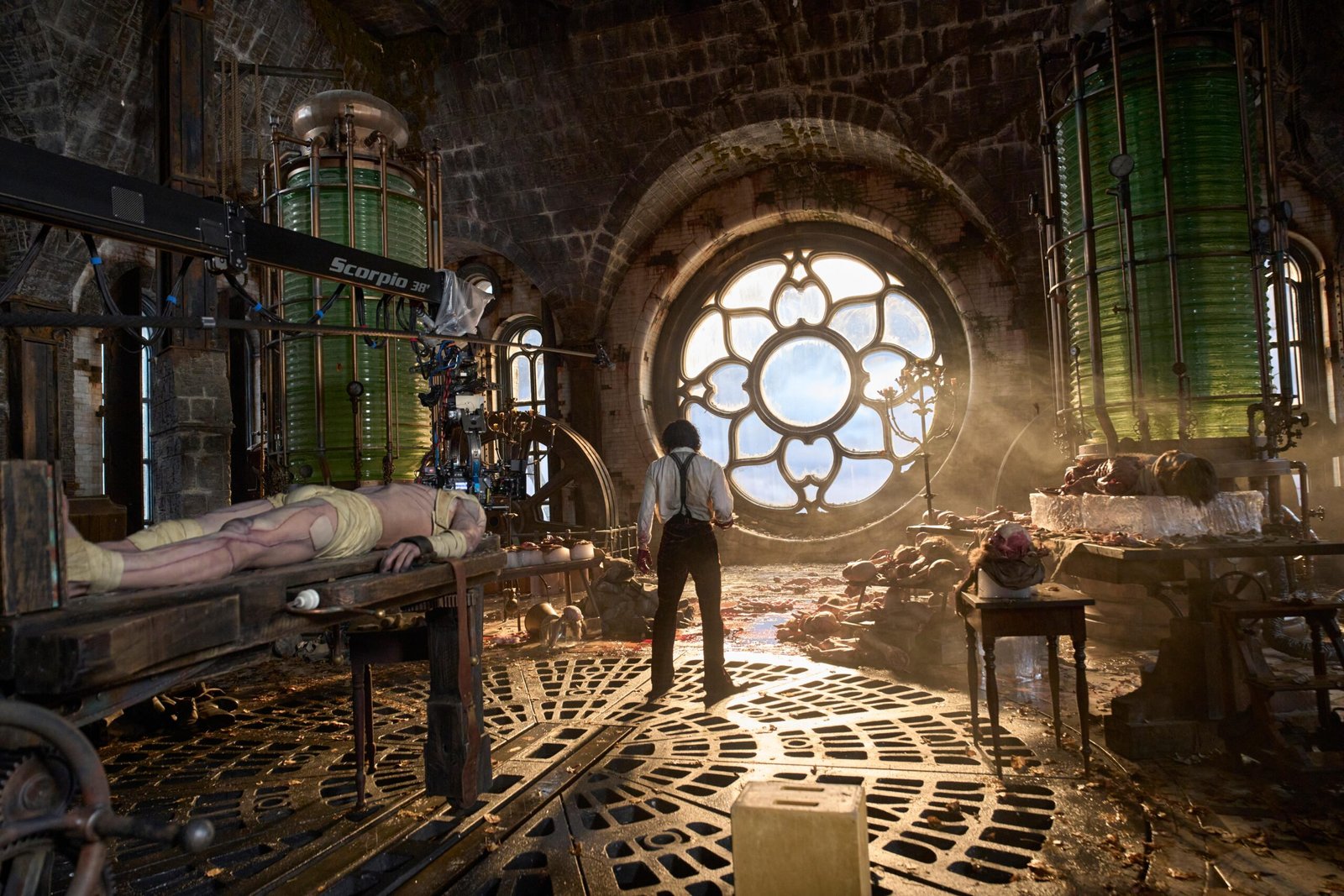
Critics’ Choice is the first moment in the season where Oscar races stop being theoretical. It’s where opinions harden, contenders turn into frontrunners, and the comfortable part of the conversation ends.
The Critics’ Choice Awards didn’t just hand out trophies last night. They clarified lanes. Craft dominance was confirmed, acting races got more uncomfortable, and a few performances walked out louder than their win count suggested. All of it landed right as the Oscar calendar starts to close in.
And yes, speeches matter. At this stage, they function like auditions. They get replayed. They become shorthand. They help voters emotionally categorize a performance as “serious,” “unstoppable,” or “safe.” No one in the Academy is ignoring Amy Madigan or Jacob Elordi anymore.
The Scorecard
On the night, I landed 16 out of 23 predictions (70%). Solid, yet far from perfect. Now, how did some of the top films perform.
Critics’ Choice isn’t about being right on paper. It’s about who leaves the room louder than they entered, and several films absolutely did while others failed.
One Battle After Another finished 3 wins from 14 nominations (21%), a total that looks respectable until you separate the categories. The film went 0 for 5 in acting, a shutout that matters as Oscar voting approaches. Sinners closed the night 4 for 17 (24%), a result that fell short of expectations given how highly it was predicted going in. And sitting clearly on top was Frankenstein, which went 4 for 11 (36%), converting more than a third of its nominations into wins and making its craft dominance impossible to ignore.
Horror did not win the night by sweeping categories or dominating a single race. It won by showing strength across disciplines. The genre asserted itself in the craft categories, where execution and world-building were rewarded, and it broke through in supporting performances, where individual work carried real weight with voters. Taken together, those results point to a genre that is no longer treated as an outlier or novelty, but as a serious, competitive presence across the ballot.
Frankenstein Set the Craft Standard
Frankenstein carried the core craft categories that tend to matter most as the season progresses. With Wicked having won Costume Design and Production Design last year and unlikely to repeat, the lane opened for a new technical anchor, and Frankenstein filled it. There was no getting around what the film accomplished in Makeup and Hairstyling, where the creation of the Creature became its defining achievement. That kind of work holds over time, and it positions Frankenstein as the craft reference point heading into Oscar season.
Two Supporting Performances That Changed the Conversation
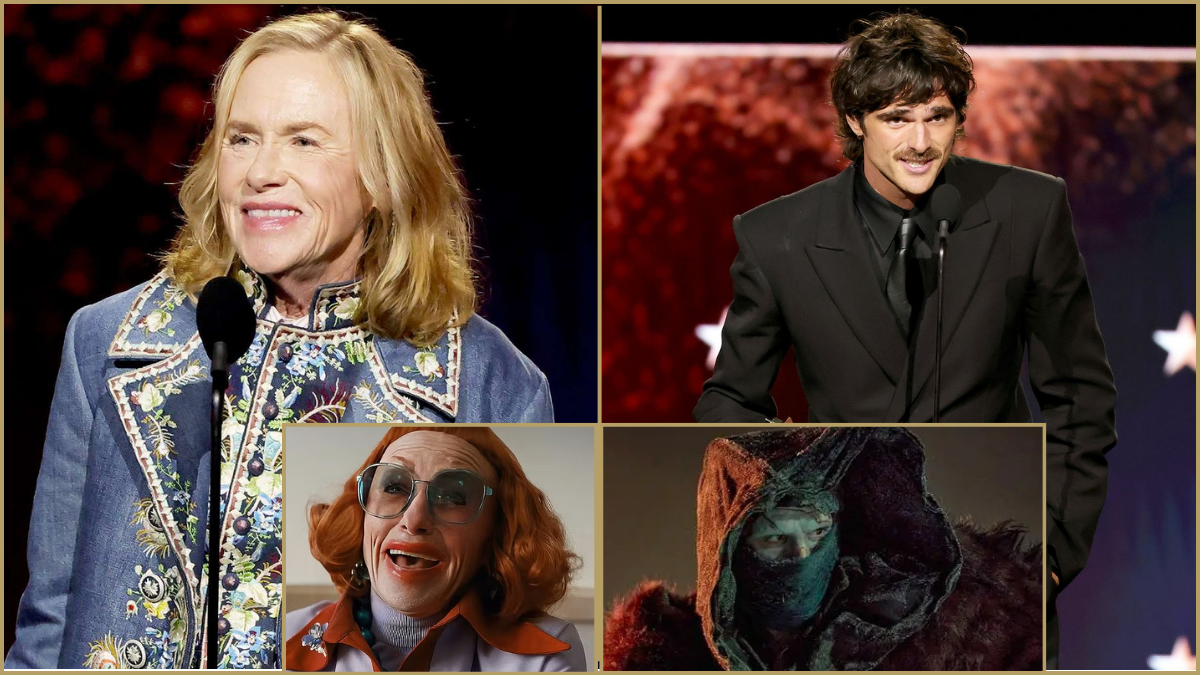
Horror’s second breakthrough came in the supporting performance categories, where Amy Madigan (Weapons) and Jacob Elordi (Frankenstein) both walked away with wins that carried real weight. These were not novelty wins or genre outliers. These were not genre courtesy prizes. They were straightforward acknowledgments of work that connected with voters.
I had predicted Madigan, despite my undying love for Ariana Grande. The Elordi win, however, caught me off guard. I’ll own a blind spot here. I had Elordi at #5 for Critics’ Choice but #3 for the Oscars, and that gap says more about my expectations than his performance. I underestimated the critics. The data corrected quickly. On Awards Expert alone, Elordi jumped 19% in a single day, moving into the consensus #5 slot. For me, that movement simply confirms what I’ve been feeling since December and forces a real rethink of my Stellan Skarsgård and Benicio del Toro placements.
Taken together, these wins signal something important. Horror performances are entering this season with real credibility, not as afterthoughts. And no one in the Academy is ignoring either of them anymore.
The Shape of OBAA and Sinners’ Wins (and Losses)
Paul Thomas Anderson’s night for One Battle After Another clarified exactly where the film is being rewarded. Wins for Best Director and Best Original Screenplay, alongside Best Picture, positioned the film as a top-level contender rather than a performance-driven one. I expect Anderson to remain dominant in these lanes through the rest of the season, with a real opportunity to finally break his long-standing record of 11 Oscar nominations without a win.
Sinners leaves Critics’ Choice with a mixed read. There is some reason for caution, but the film also has two lanes that feel increasingly firm with the Academy. Ryan Coogler’s Best Adapted Screenplay and Ludwig Göransson’s score stand out as its clearest anchors going forward.
There were also meaningful ensemble signals. Miles Caton’s win for Best Young Actor/Actress highlighted how much the film’s supporting work resonated, a strength that carried through to Sinners winning Best Casting and Ensemble, presented to Francine Maisler. That recognition may have been Critics’ Choice’s way of rewarding the film’s collective performances after limiting it to just two acting nominations.
What that means for the Academy’s first-ever Casting Oscar remains an open question. With no precedent to draw from, this category may ultimately behave very differently once branch dynamics and actor voting come into play.
The cinematography race remains wide open. It is shaping up as a season-long tug of war between Autumn Durald Arkapaw’s work on Sinners and Adolpho Veloso’s Train Dreams. Regional critics groups have made it clear that neither side is giving ground. This round went to Veloso, but the larger fight is still very much in play.
Elsewhere, a few results quietly reshaped the picture. Film Editing delivered one of the night’s most unexpected outcomes by going to F1: The Movie, a reminder that this category remains volatile. The film also clinched Sound, reinforcing how reliably racing movies perform in that lane. Best Original Song clarified just as quickly. “Golden” from K-Pop Demon Hunters continued its rise and now looks like the song to beat, even over “I Lied to You” from Sinners, which felt like a plausible Critics’ Choice spoiler going in.
Rounding Out the Night
A few other races rounded out the night in ways that felt less surprising, but no less instructive. Animated Feature went to K-Pop Demon Hunters, continuing its steady dominance and keeping the category firmly locked. International Feature Film went to The Secret Agent, a result that makes more sense in hindsight given that Critics’ Choice also nominated Wagner Moura for Best Lead Actor. That one is on me. It was a reminder to pay closer attention to how this voting body signals support across categories.
Best Actor also delivered a moment of real narrative momentum. Timothée Chalamet finally broke through for Marty Supreme, with the fourth time proving to be the charm. Critics’ Choice has now given him the clearest runway he’s had in years. The bigger question isn’t whether this win mattered. It’s whether the momentum carries all the way to Oscar night. Right now, it looks like it just might.
Jessie Buckley’s win for Hamnet deserves its own pause. Despite some regional groups breaking for Rose Byrne in If I Had Legs I’d Kick You, this result felt like a line being drawn. Every awards season has one performance that simply doesn’t let go once the first domino falls. Last year, that was Kieran Culkin for A Real Pain. This year, it’s Buckley, and everyone else is playing for a nomination.
And then there was Visual Effects. No shock there. Avatar: Fire and Ash took the prize, continuing the most reliable pattern in awards season. When an Avatar film is in the race, Visual Effects is the one category you can pencil in with confidence. The Critics’ Choice Award for Stunts went to Mission: Impossible: The Final Reckoning, an outcome that felt entirely foreseeable. The film has been positioned as the technical endpoint of the franchise, and voters responded accordingly.
Final Thoughts
With Critics’ Choice now on the board, and Actor Awards nominations formerly known as the Screen Actors Guild (SAG) landing January 7 alongside Golden Globes winners on January 11, Academy voters will head into nomination voting with very specific narratives already in play. Those signals matter when ballots are filled out between January 12 and January 16. If you are trying to predict Oscar nominees, this is the stretch where instincts either sharpen or fall apart.
View the full Critics’ Choice winners and nominations here. Track the rest of Awards Season in our Awards Season Tracker.
Follow Oscar Obsessed ADHD
For data, chaos, and heart in every award season.
YouTube | Instagram | X