
“Project Hail Mary”
Spoiler-Free Review
July 30, 2026 | Lisa Hatzenbeller

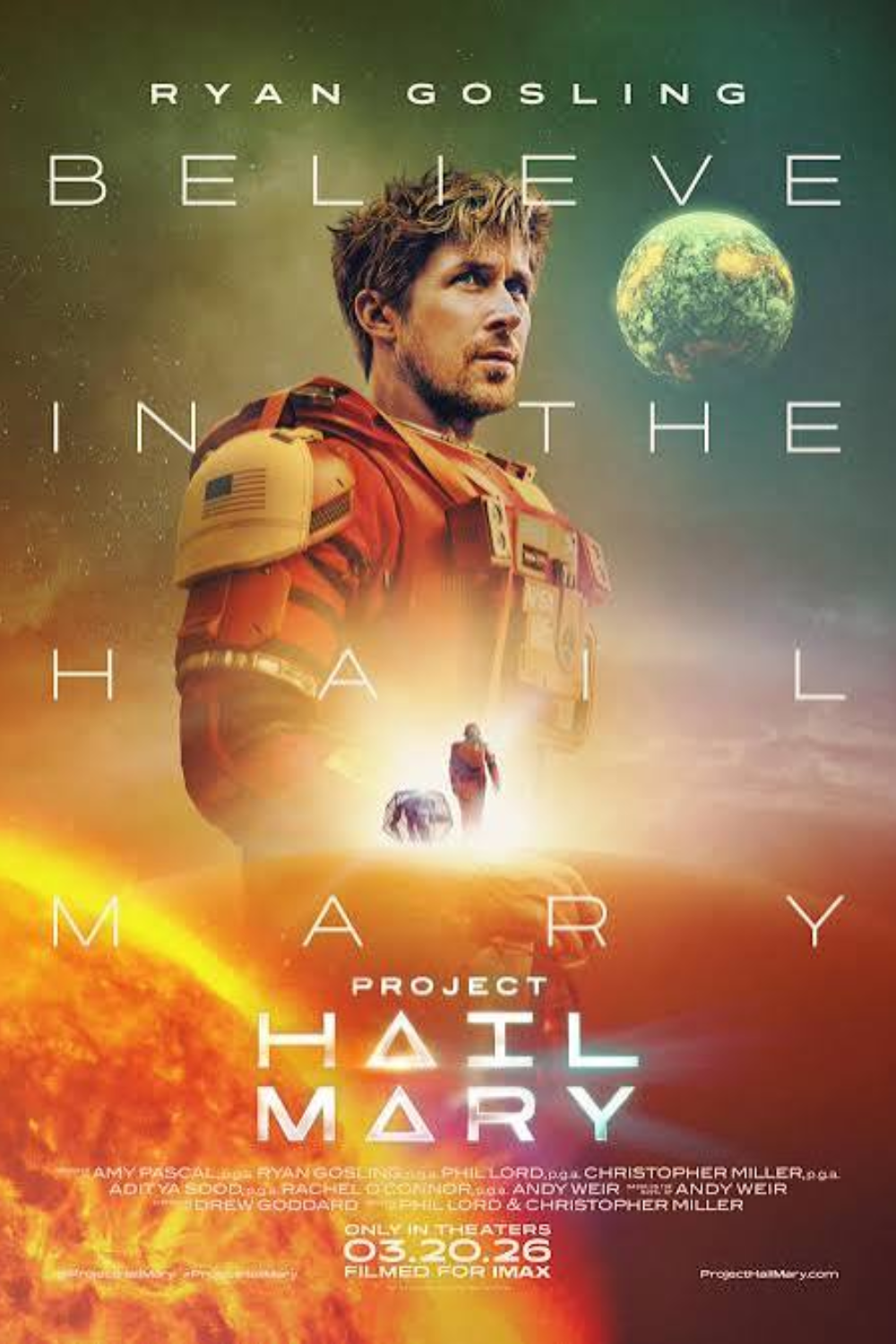
Premise: A science teacher wakes up alone on a spaceship. As his memory returns, he uncovers a mission to stop a mysterious substance killing Earth’s sun and that an unexpected friendship may be the key.
Genres: Sci-Fi, Drama, and Thriller
Runtime: 156 minutes
MPAA Rating: R
Release Year: 2026
Starring: Ryan Gosling, Sandra Hüller, and James Ortiz
Directed by: Phil Lord and Christopher Miller
Written by: Screenplay by Drew Goddard
Based on: Novel, Project Hail Mary by Andy Weir
Distributed by: Amazon MGM Studios
There are some movies that impress you with their scale, and then there are movies that surprise you with how much heart they have. Project Hail Mary manages to do both. The science and visual spectacle are certainly major draws, but the humor, performances, and emotional depth are what make the film stay with you long after the credits roll.
At 156 minutes, the story has plenty of time to lose momentum, overload the audience with scientific explanations, or become another effects-heavy blockbuster with very little underneath it. Instead, it held my attention from beginning to end. The discoveries are exciting, the stakes feel enormous, and the quieter moments are given enough room to build genuine tension and connection without slowing the mission down.
Ryan Gosling carries much of the film through isolation, green-screen environments, and reactions to things that were not physically there during filming, yet his performance never feels disconnected from the world around him. Sandra Hüller brings a direct, no-nonsense presence, while Drew Goddard’s screenplay keeps the scientific material accessible without stripping away its intelligence. And then there is Rocky. Without giving anything away, he is the kind of character who steals your heart when you least expect it and becomes essential to everything that follows.
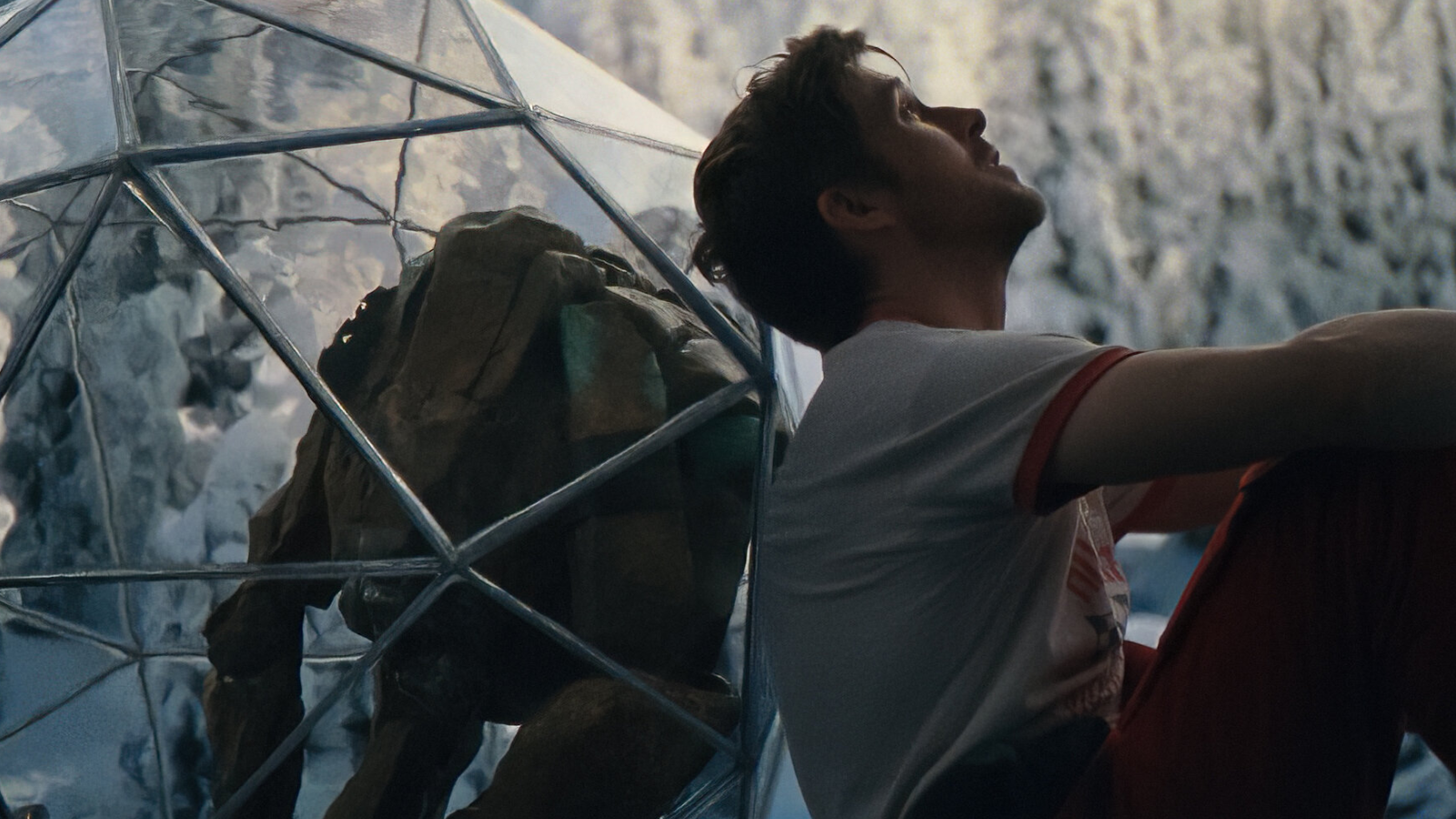
Science With a Heartbeat
Few authors have made as visible an impact on modern science fiction with as little published material as Andy Weir. Despite writing only three novels, two have already become major Hollywood productions, with The Martian earning critical acclaim and multiple Academy Award nominations before this adaptation reached theaters. On paper, the similarities are impossible to ignore. Once again, audiences follow an exceptionally intelligent man isolated in space who must rely on science, ingenuity, and humor to survive.
Fortunately, the film never feels like an attempt to make The Martian 2. Directors Phil Lord and Christopher Miller, working from Drew Goddard’s screenplay, embrace the recognizable DNA of Weir’s storytelling while giving this story an identity of its own almost immediately. What begins as a high-concept survival mission gradually becomes something warmer, stranger, and more emotionally involving than its premise initially suggests.
Adapting Weir’s work is not as simple as transferring scientific explanations from the page to the screen. His stories succeed because they make incredibly complex ideas feel exciting rather than intimidating. Every equation, experiment, and impossible obstacle pushes the story forward, and the best moments come from watching intelligence become part of the action rather than a pause between set pieces.
Goddard clearly understands that balance after previously adapting The Martian. Instead of watering down the science, the screenplay trusts viewers to follow along while weaving each explanation into moments of discovery, danger, experimentation, and problem-solving. The result is a film where the breakthroughs feel earned because the audience understands both the challenge and the process behind solving it.
I have not read Andy Weir’s novel myself, so I cannot speak firsthand to every change made for the screen. My uncles and cousins have, however, and all of them walked away feeling the film remained remarkably faithful to the book and captured what made the story special. Hearing that only reinforced my appreciation for an adaptation that handles difficult material without losing its humor, momentum, or sense of wonder.
A Mission Guided by the Right Directors
After films like The LEGO Movie, 21 Jump Street, and the Spider-Verse franchise, Phil Lord and Christopher Miller have built a reputation for blending humor with genuine emotion. This is a very different kind of project, but they once again prove they understand how to keep audiences connected to the people at the center of a much larger story.
Lord and Miller keep the story moving by varying its rhythm, knowing when to build suspense, when to lean into comedy, and when to let a conversation breathe. The quieter scenes never feel like interruptions because they continue developing the characters and raising the personal cost of the mission. At no point did I find myself checking the clock or waiting for the next big exciting scene.
The directors also resist the temptation to overwhelm the audience with spectacle. The film contains breathtaking visual effects and enormous scientific concepts, but those elements never take control of the story. Every challenge, discovery, and setback remains tied to the choices being made within the scene, which allows the mission to feel personal even when the stakes extend across the entire planet.
Perhaps their greatest accomplishment is how naturally they move between tones. One moment can be funny and awkward, while the next becomes tense or unexpectedly moving, yet the transitions never feel forced. The humor does not weaken the drama, and the emotional moments do not feel manipulative. Lord and Miller allow those reactions to develop gradually, which makes the film’s biggest payoffs feel earned.

Performances That Keep the Mission Grounded
Ryan Gosling delivers one of the strongest performances of his career as Ryland Grace. Audiences have come to expect his effortless charm and comedic timing, but this role demands much more than that. Carrying large portions of the story in isolation, Gosling has to communicate fear, confusion, curiosity, grief, and determination while often reacting to environments, visual effects, and characters that were not physically present during filming.
It is the kind of performance that could have easily felt artificial, yet Gosling makes every discovery, setback, and emotional breakthrough feel authentic. He balances the film’s humor with genuine vulnerability, giving Grace a humanity that keeps the audience invested even when the scientific material becomes more complicated. His performance makes the character feel intelligent without making him emotionally distant, which is essential to the story’s success.
Sandra Hüller is equally impressive as Eva Stratt, bringing a calm, no-nonsense authority that perfectly complements Gosling’s more openly emotional performance. She never overplays the role or softens Stratt’s difficult decisions simply to make her more likable. Instead, Hüller embraces the character’s unwavering conviction and the impossible responsibility she carries.
Even with limited screen time, Hüller commands every scene through restraint rather than theatrical intensity. Stratt is not written as a simple obstacle or cold authority figure. She understands the stakes before almost anyone else, and Hüller makes it clear that every harsh decision comes from that knowledge rather than a lack of humanity. Together, the two performances give the mission both its emotional uncertainty and its relentless sense of purpose.
A Relationship Worth Crossing Space For
The strongest part of the film is the unexpected relationship at the center of the story. What begins as a mission focused entirely on survival gradually becomes something far more personal, and the screenplay gives that connection time to develop instead of demanding an immediate emotional bond.
Communication does not come easily, trust has to be earned, and every small breakthrough feels meaningful because the characters have to work for it. Their connection grows through curiosity, frustration, humor, cooperation, and sacrifice. The lighter moments make the relationship endearing, but the quieter scenes are what give it real weight.
The story understands that friendship is not created through one dramatic gesture. It is built through patience, shared experiences, repeated effort, and the choice to keep showing up for someone even when the circumstances seem impossible. That gradual development is what allows the relationship to become believable rather than simply convenient to the plot.
Rocky quickly becomes much more than a clever addition to the story or a showcase for the film’s technology. He brings warmth, personality, and plenty of humor, but he also changes what the mission means to Grace. I expected to be impressed by the science, the scale, and the visual spectacle. I did not expect this friendship to pull at my heartstrings as much as it did.
The fate of humanity may drive the mission, but the bond formed along the way is what makes the audience care about how that mission ends. By the time the story reaches its emotional turning points, the relationship has become just as important as the scientific problem they are trying to solve.
Visual Effects With a Purpose
Visually, the film is stunning, but the effects are never treated as the only reason to watch it. The spacecraft, scientific environments, and larger cosmic imagery create a convincing sense of scale, while the smaller details make each location feel functional rather than simply expensive. Every surface, piece of equipment, and unfamiliar environment appears designed around the needs of the story.
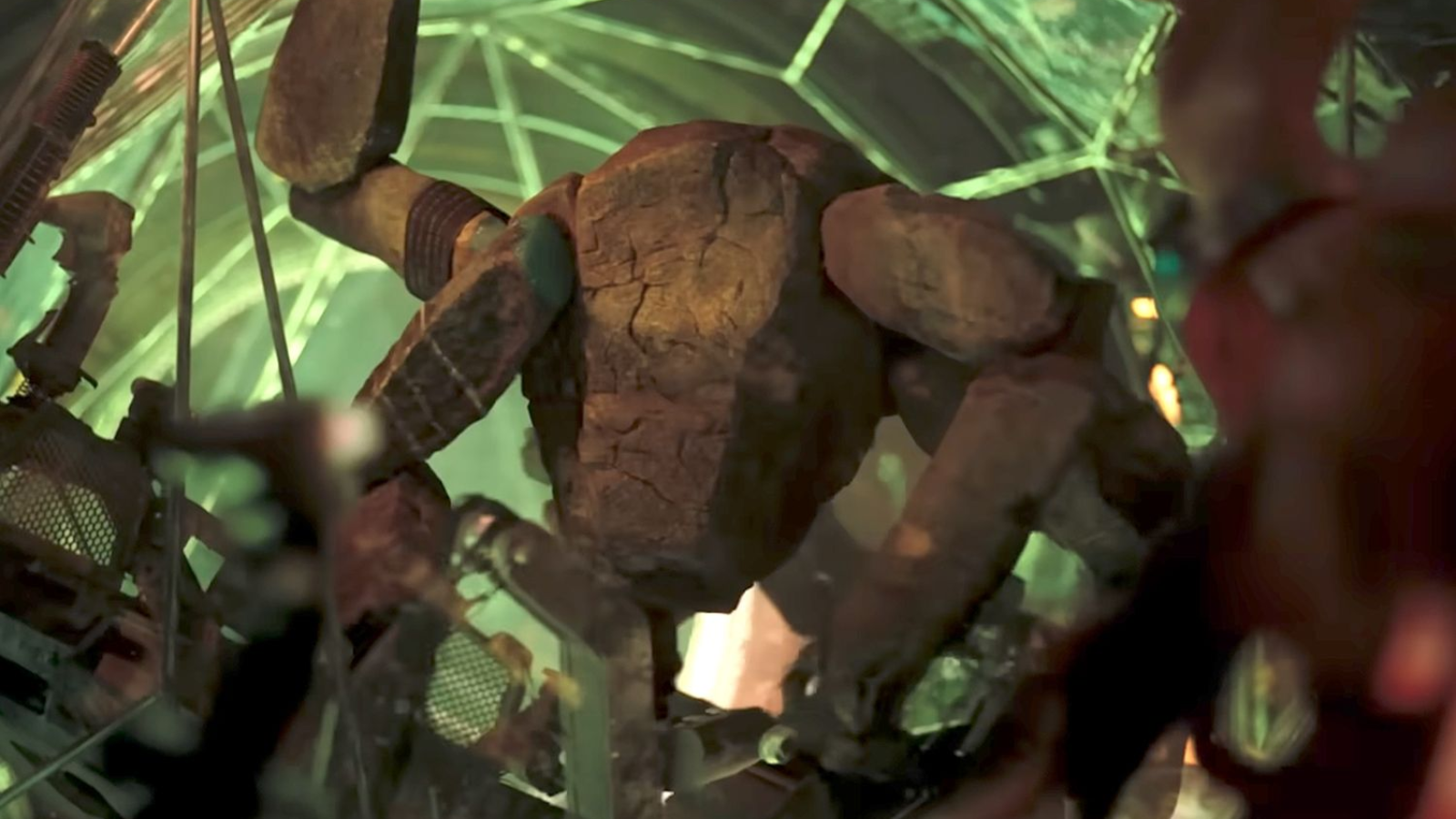
The real achievement is how seamlessly the visual effects blend with the practical performance work to make Rocky feel like a living, breathing character. Rather than feeling like a digital creation inserted into each scene, he has a genuine physical presence that gives Ryan Gosling someone believable to interact with.
That authenticity comes from the work of the puppeteering team, whose movements, reactions, and attention to detail gave Rocky his sense of weight and personality. As lead puppeteer, James Ortiz played a particularly important role in shaping the character’s performance, and that connection became even stronger when he ultimately became Rocky’s voice as well.
🧠ADHD Watch Factor
Pacing: Steady – Never feels weighed down by its runtime
Attention Hold: Locked In – Constant discoveries keep your brain engaged
Emotional Pull: Growing – Relationships become the film’s greatest strength
Chaos Level: Controlled – High stakes without becoming overwhelming
The production design, cinematography, sound design, and score strengthen that immersion even further. Together, they create a world that feels enormous without losing the intimacy of the story unfolding inside it. Rather than competing for attention, every technical element works in harmony to support the characters and the emotional journey at the center of the film.
Final Verdict
At its core, Project Hail Mary is a film about hope, resilience, sacrifice, and the unexpected relationships that shape us. It delivers plenty of laughs, breathtaking visuals, and fascinating scientific ideas, but it is the connection at the center of the story that gives everything else meaning.
What makes the film linger is the way it finds warmth in a place defined by isolation. The mission may begin with the fate of humanity hanging in the balance, but the story becomes increasingly personal as trust forms under circumstances where it should be impossible. That emotional journey gives every scientific breakthrough and every moment of danger greater weight.
I expected to be impressed. I did not expect it to hit me as deeply as it did. Smart, funny, hopeful, and surprisingly tender, it is one of the year’s most satisfying science-fiction adventures.
Awards Outlook (10)
Best Picture: Ryan Gosling, Phil Lord, Christopher Miller, Rachel O’Connor, Amy Pascal, and Aditya Sood
Director: Phil Lord and Christopher Miller
Adapted Screenplay: Drew Goddard
Lead Actor: Ryan Gosling
Cinematography: Greig Fraser
Film Editing: Joel Negron
Original Score: Daniel Pemberton
Production Design: Charles Wood
Sound: Erik Aadahl
Visual Effects: Paul Lambert and Mag Sarnowska
Where to Watch