
When Horror Crashed Oscar Night
7 historic horror Oscar nomination that shook the Academy, proving horror has always deserved the spotlight, blood and all.
October 23, 2025 | By Lisa Hatzenbeller
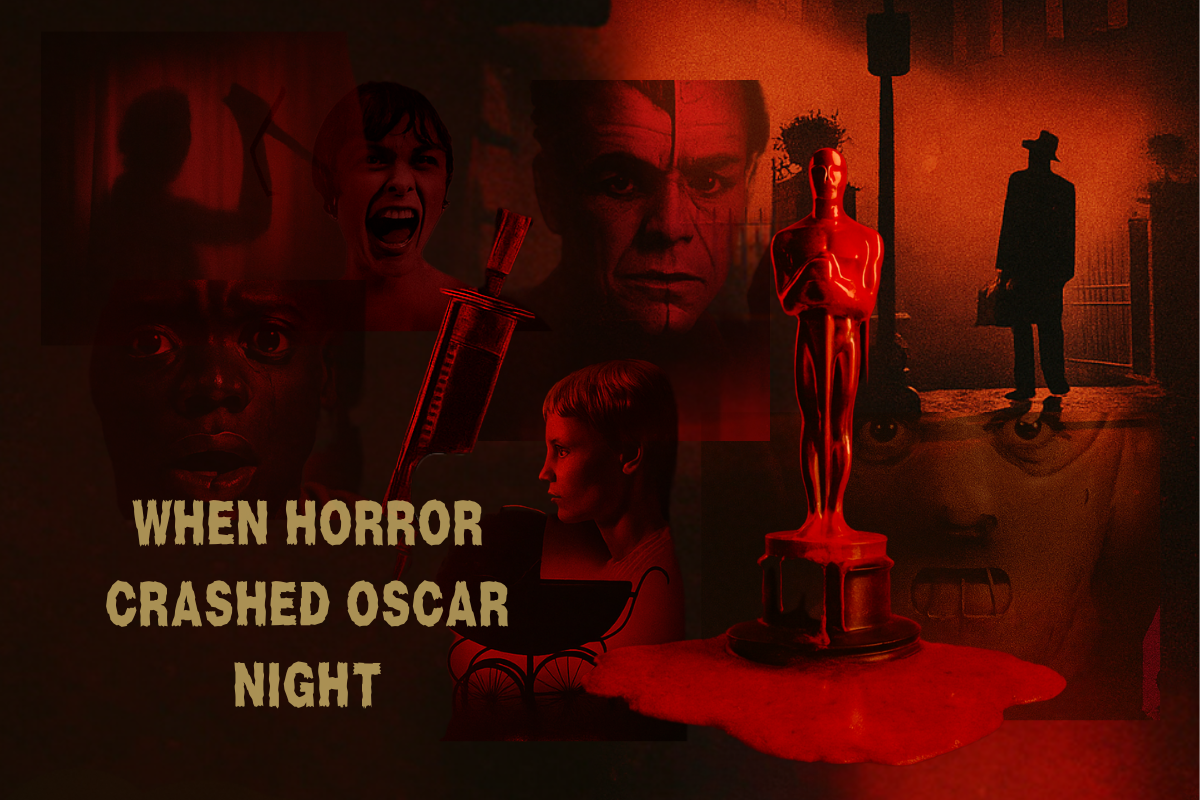
The Academy never liked being scared. Horror just kept showing up anyway.
Some of the genre’s earliest wins date back nearly a century. And while it’s rare, it’s never been unheard of. From possessed children to vengeful slashers, horror stories have quietly collected nominations and golden statues long before voters coined terms like “elevated horror.” So why are we still surprised when it happens?
Last season, The Substance earned five nominations, including Best Picture, and won for Makeup and Hairstyling. And with Sinners circling major categories this year, the Academy’s long, complicated relationship with horror is finally coming back into focus. So in honor of Halloween, and every horror fan who’s tired of being treated like an outsider, here are seven unforgettable times the genre crashed Oscar night and made history.
1. Dr. Jekyll and Mr. Hyde (1931)
The horror genre earned its first major Oscar recognition more than 90 years ago. At the 5th Academy Awards, Fredric March won Best Actor for his chilling dual role in Dr. Jekyll and Mr. Hyde. It wasn’t just a makeup trick or a camera effect. It was a performance that captured the terror of transformation in a way no one had seen before.
The film also earned two other nominations, one for adapted writing and one for cinematography, which was a big deal at a time when horror films were often dismissed. March’s win was officially recorded as a tie with Wallace Beery for The Champ, but the voting margin tells a different story. March actually received one more vote than Beery. Under Academy rules at the time, any margin of three votes or fewer was still counted as a tie. By today’s standards, March would have won outright. To this day, it remains the only time in Oscar history that a Best Actor win has been labeled a tie.
Dr. Jekyll and Mr. Hyde proved horror could be more than spectacle. It could showcase real acting, emotional weight, and psychological depth. The Academy noticed, even if just briefly, and nearly a century later, we’re still noticing too.
2. Psycho (1960)
Alfred Hitchcock’s Psycho didn’t just slash through genre expectations; it redefined what horror could be. The film was a box office smash, a cultural firestorm, and a cinematic breakthrough that influenced decades of thrillers. And yet, when it came time for Oscar recognition, the Academy mostly looked away.
Psycho received four nominations: Best Director, Best Supporting Actress for Janet Leigh, Best Cinematography (Black-and-White), and Best Art Direction (Black-and-White). It won NONE.
What’s more baffling in hindsight is the absence of Anthony Perkins, whose eerie, twitchy performance as Norman Bates became one of the most iconic in film history. Even with the genre bias of the time, a film that is built around his haunting presence, the absence of a nomination for him feels like a glaring omission. Leigh’s nomination did break ground, but Perkins should have been there too.
Still, Psycho “carved” out a lasting legacy. It helped horror evolve into something sharper and more psychological, where suspense mattered more than shock value. And that connection was underscored recently by the release of Monster: The Ed Gein Story on Netflix, which credits the real‑life crimes of Ed Gein as the inspiration behind Norman Bates and other horror icons.
For many film lovers, Psycho marked the moment horror proved it could live in the same creative space as prestige thrillers, whether the Academy wanted to admit it or not.
3. Rosemary’s Baby (1968)
By the late 1960s, horror was inching closer to mainstream prestige. But it was Rosemary’s Baby that kicked the door open. The film combined psychological dread with domestic realism in a way that made its horror feel disturbingly ordinary. It wasn’t just the devil that scared audiences. It was the gaslighting, the manipulation, the isolation, the loss of control, and the sense that no one believed you…especially the people who were supposed to.
Ruth Gordon won Best Supporting Actress for her role as the smiling, nosy, deceptively helpful neighbor, making her the first woman to win an Oscar for a horror performance. The film also picked up a nomination for Best Adapted Screenplay, though it lost to The Lion in Winter.
Directed by Roman Polanski in his Hollywood debut, the film’s precision and tension helped redefine what horror could look and feel like. It wasn’t about gore; it was about control. Mia Farrow carried the emotional weight of the film in a performance that has only grown in stature over time. Though she wasn’t nominated, her work became the blueprint for psychological horror heroines for decades to come.
Over fifty years later, the film still resonates. Its themes around bodily autonomy and weaponized politeness feel just as relevant now as they did then. And for a generation of horror fans, me included, it’s one of those movies you watched too young, remembered too vividly, and couldn’t shake afterward. I still own it (and watch it) on DVD. That should tell you something.
4. The Exorcist (1973)
When people talk about horror at the Oscars, this is the one that always comes up. The Exorcist earned ten nominations, the most ever for a horror film, including Best Picture, Director, Actress, Supporting Actor, Supporting Actress, and Screenplay. It won two: Adapted Screenplay and Sound.
The film sparked a national conversation. Theaters handed out vomit bags. Religious groups protested. People fainted. And yet the Academy still showed up. It definitely didn’t sweep, but it signaled a new era where horror could compete across the board, not just in technical categories, but in the top races too. Horror didn’t sneak in that year, it stood on top, tying with The Sting for most Oscar nominations at the 46th Academy Awards.
It was also one of the first horror films I ever watched, I was maybe seven, sitting next to my dad, barely able to breathe during the silhouette-and-lamplight scene. That moment’s burned into my memory, just like the green vomit that launched a thousand headlines and haunted a generation of moviegoers. And 50 years later, no other horror film has matched its nomination count. This is still the benchmark.
5. The Silence of the Lambs (1991)
If The Exorcist showed horror could compete, The Silence of the Lambs proved it could dominate. It became the first (and only) horror film to win all five of the Academy’s top honors: Picture, Director, Actor, Actress, and Screenplay. That kind of sweep is rare across any genre. In the entire history of the Oscars, it’s only happened two other times: It Happened One Night (1934) and One Flew Over the Cuckoo’s Nest (1975). Oh, and the film also earned two other nominations as well, Sound and Film Editing.
Anthony Hopkins redefined what a horror villain could be: calculating, still, charismatic, and terrifying without ever raising his voice. And he could do it all in 16 minutes. Jodie Foster brought the human side, grounding the film with empathy and resolve. Together, they elevated horror to a place it had never been…the Oscars main stage, with a clean sweep.
To this day, no other horror film has done what The Silence of the Lambs did. People still argue whether it even counts as horror. Regardless, nothing has come close to matching its impact, for Oscar history or for movie lovers.
6. Get Out (2017)
Jordan Peele’s Get Out was the kind of horror film that left people sitting in stunned silence as the credits rolled. It was sharp, political, funny, and horrifying, all without ever losing its clarity of voice. It earned four nominations: Picture, Director, Actor (Daniel Kaluuya), and Original Screenplay, which Peele won.
That win made history, twice, becoming the first horror film to win Best Original Screenplay and making Peele the first Black writer to win for writing. This wasn’t “elevated horror.” It was just horror; smart, grounded, and long overdue. It directly tied to racial trauma and systemic fear. It didn’t dance around the metaphor. It stared directly into racial trauma and systemic fear.
For a lot of younger voters and fans, Get Out was the film that made them realize horror could be Oscar-worthy without compromise. That shift helped reshape the Academy landscape.
7. The Substance (2024)
A woman’s body, split in two, one becoming everything society desires, the other forced to watch from the shadows. That’s horror. That’s The Substance.
Coralie Fargeat’s grotesque, body-horror satire hit Cannes like a gut punch, walking away with the Best Screenplay prize and rave reviews. Still, few expected it to go the distance. But it did. Like a freight train, it barreled into Oscar season and picked up five nominations: Best Picture, Best Original Screenplay, Best Lead Actress (Demi Moore – who I still think should have won), and Best Supporting Actress (Margaret Qualley). It took home the Oscar for Makeup & Hairstyling.
It wasn’t just the win that mattered, it was what the nominations represented. The Substance proved that horror, even the kind that makes people deeply uncomfortable, can no longer be sidelined. Those five nominations belonged to every gory, brutal, taboo-breaking film that came before and got nothing.
So why did this one catch people off guard? Maybe because we’ve been conditioned to think horror can’t go the distance. Maybe because a body-swapping satire about aging women in Hollywood felt “too much” for a voting body that once ignored Hereditary, Us, and Pearl. But this time, the Academy said yes and didn’t flinch.
This visceral, violent, and unapologetically female film not only walked the red carpet but said “We belong here”. It claimed space horror has been denied for decades. And it made damn sure everyone saw it.
With Sinners circling every major category this year, the conversation around horror and the Oscars is louder than ever. These seven films not only broke barriers, they rewired the system. Each one chipped away at the myth that horror can’t be high art. So, if voters are still surprised when horror shows up at the Dolby, maybe the real question is-why?
💀 Think we missed one?
Tag me with your favorite Oscar-worthy horror film. I’ll be watching and maybe shouting it out.