
“Black Phone 2”
Spoiler-Free Review
May 21, 2026 | Lisa Hatzenbeller

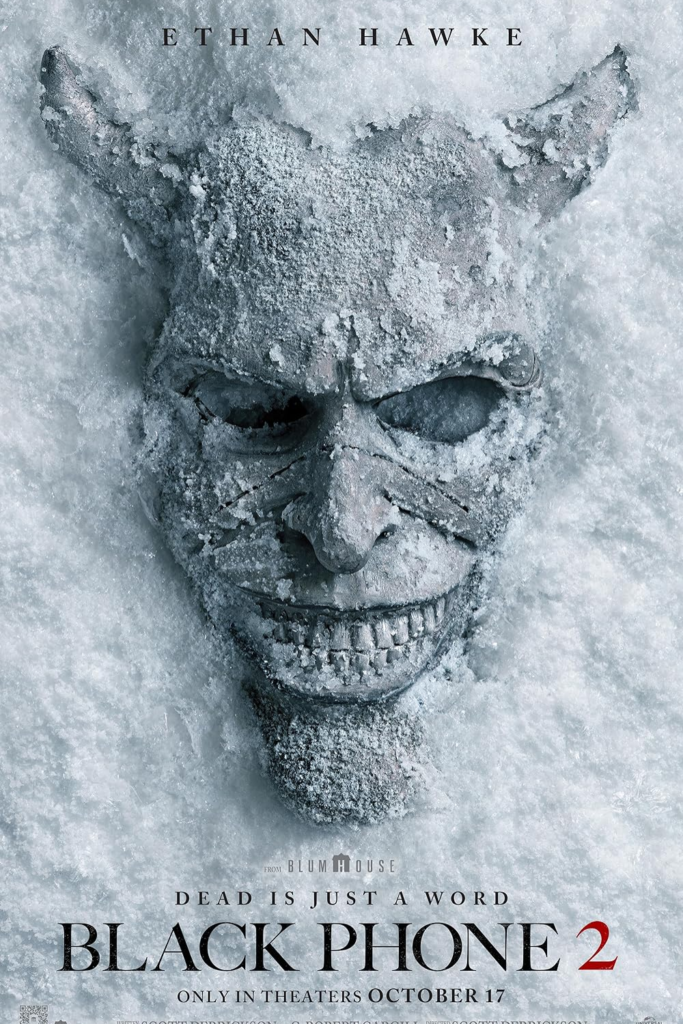
Premise: As Finn, now 17, struggles with life after his captivity, his sister begins receiving calls in her dreams from the black phone and seeing disturbing visions of three boys being stalked at a winter camp known as Alpine Lake.
Genres: Horror
Runtime: 114 minutes
MPAA Rating: R
Release Year: 2025
Starring: Mason Thames, Madeleine McGraw, and Ethan Hawke
Directed by: Scott Derrickson
Written by: Screenplay by C. Robert Cargill and Scott Derrickson
Distributed by: Universal Pictures
Horror sequels usually fall into one of two traps: either they repeat the original film almost scene-for-scene, or they expand the mythology so aggressively that the fear starts disappearing underneath the explanations. The Black Phone 2 spends most of its runtime stuck somewhere in the middle. Sometimes that works in the film’s favor. Other times, it leaves the sequel feeling far less tightly controlled than the original.
Set after the events of the original film, The Black Phone 2 follows Finney and Gwen as the trauma of what happened refuses to stay buried. Instead of trying to simply recreate the first movie beat-for-beat, Scott Derrickson leans further into psychological horror, grief, memory, and the scars violence leaves behind.
That throughline helps the sequel feel justified instead of purely franchise-driven.
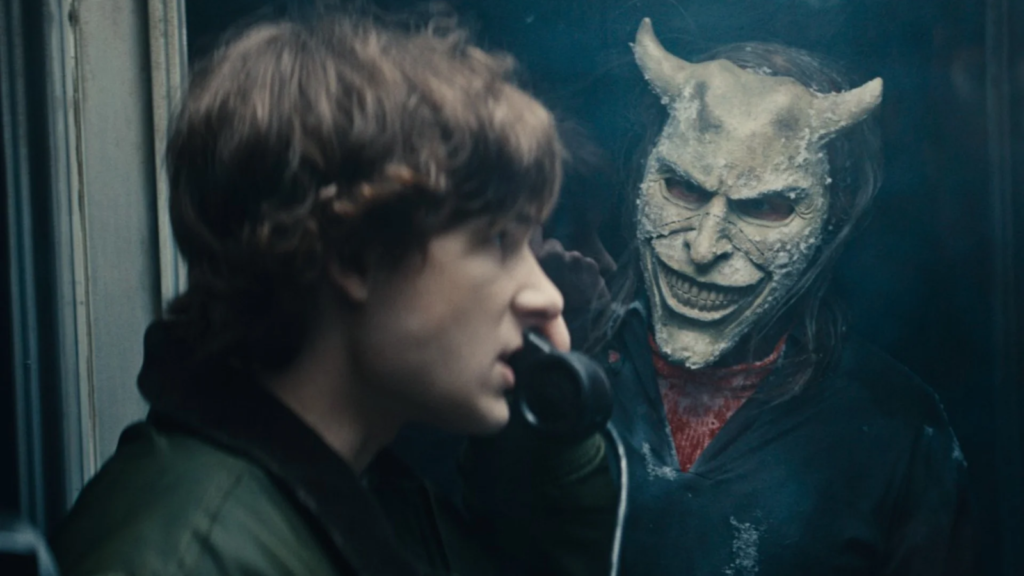
Scott Derrickson Expands the Horror Beyond the Basement
The sequel is also visually more ambitious than the original. Derrickson expands the atmosphere beyond the claustrophobic basement terror of the first film while still maintaining the cold, uneasy feeling that defined the franchise. The film leans heavier into mythology and supernatural imagery, which may divide viewers depending on how much ambiguity they wanted preserved from the original. The nightmare imagery occasionally becomes genuinely unsettling, especially when the movie leans into uncertainty rather than overexplaining what’s happening.
The larger scope creates mixed results. Certain sequences feel visually ambitious, while others drift dangerously close to familiar horror territory that recalls A Nightmare on Elm Street a little too strongly. The original Black Phone benefited from simplicity and claustrophobia. This sequel trades some of that restraint for expanded mythology and bigger ideas.
Still, Derrickson deserves credit for not turning the sequel into a loud imitation of the first film. The movie remains more interested in persistent dread and long-term consequences than cheap jump-scare overload.
Hawke Still Feels Unsettling Even in the Shadows
Hawke once again brings an unsettling unpredictability to The Grabber. What continues to make the performance work isn’t loudness or brutality, but the strange immaturity underneath the menace. Hawke plays the character with a childlike instability that somehow makes him even more uncomfortable to watch.
The film also avoids overusing him simply because audiences responded strongly to the first movie. That restraint helps preserve the uneasiness surrounding the character instead of reducing him to a franchise mascot built around catchphrases and iconic poses.
Mason Thames and Madeleine McGraw continue to anchor the story well, particularly during the quieter moments between the larger horror sequences. McGraw again stands out as Gwen, bringing intensity and conviction to material that could have easily felt ridiculous in a weaker sequel.
Survival Doesn’t End When the Credits Roll
The Black Phone 2 works best when it focuses on what survival actually leaves behind. The film keeps circling back to exhaustion, fear, and the damage violence leaves behind. That lasting fallout becomes more important to the sequel than simply trying to recreate the first movie’s kidnappings and suspense.
Pacing becomes one of the film’s biggest weaknesses. Some sequences linger too long, causing the tension to flatten instead of build. The atmosphere remains effective, but there were stretches where I could feel the film testing my attention rather than pulling me deeper into the story.
That uneven rhythm is ultimately what holds the sequel back. Some sequel escalation feels expected, and certain story threads don’t hit with the same impact as the first film. There are compelling ideas buried throughout The Black Phone 2, but the movie doesn’t always know when to push forward and when to pull back.
🧠ADHD Watch Factor
Pacing: Slow – Several scenes drag longer than necessary
Attention Hold: Uneven – Strong moments fight against exhausting stretches
Emotional Pull: Heavy – Gwen’s storyline carries much of the film
Chaos Level: Controlled – Supernatural horror leans into nightmare-style tension
Final Thoughts
The Black Phone 2 doesn’t fully recapture the tight claustrophobic fear that made the original film so effective, but it still finds compelling territory in the scars left behind after survival. Strong performances, unsettling imagery, and a darker nightmare-driven atmosphere help the sequel stand apart even when the pacing struggles to maintain consistent tension.
Awards History
Astra Film Awards
• Best Horror or Thriller Feature Nominee
• Best Performance in a Horror or Thriller Nominee – Ethan Hawke
• Best Young Performer – Madeleine McGraw
Hollywood Music in Media Awards (HMMA)
• Best Original Score – Horror/Thriller Film Nominee – Atticus Derrickson
Academy of Science Fiction, Fantasy & Horror Films, USA
• Best Cinematic Adaptation Film
• Best Performance by a Younger Actor/Actress Nominee – Madeleine McGraw
Where to Watch