
“The Devil Wears Prada 2”
Spoiler-Free Review
June 7, 2026 | Lisa Hatzenbeller
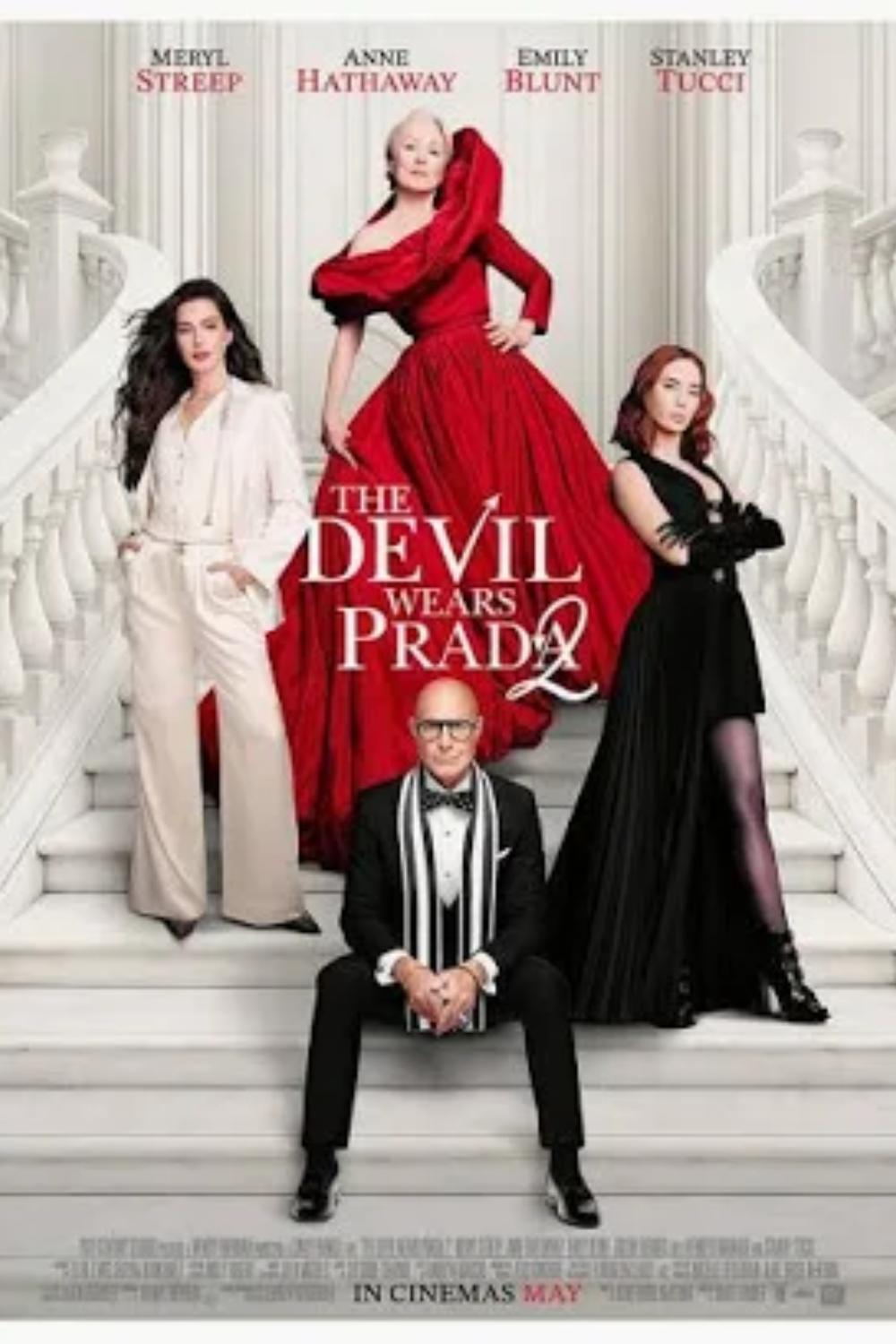
Premise: Andy Sachs reunites with Miranda Priestly as they navigate their careers amid the decline of traditional magazine publishing.
Genres: Comedy and Drama
Runtime: 119 minutes
MPAA Rating: PG-13
Release Year: 2026
Starring: Emily Blunt, Anne Hathaway, Meryl Streep, and Stanley Tucci
Directed by: David Frankel
Written by: Screenplay by Aline Brosh McKenna
Distributed by: 20th Century Studios
Nearly twenty years later, The Devil Wears Prada 2 arrives with the same burden that shadows every legacy sequel. It has to revive affection for a beloved hit while proving there is still a reason to return. That is an especially difficult task when the 2006 film remains one of the defining studio comedies of its era. Even so, I went in believing this sequel had a chance.
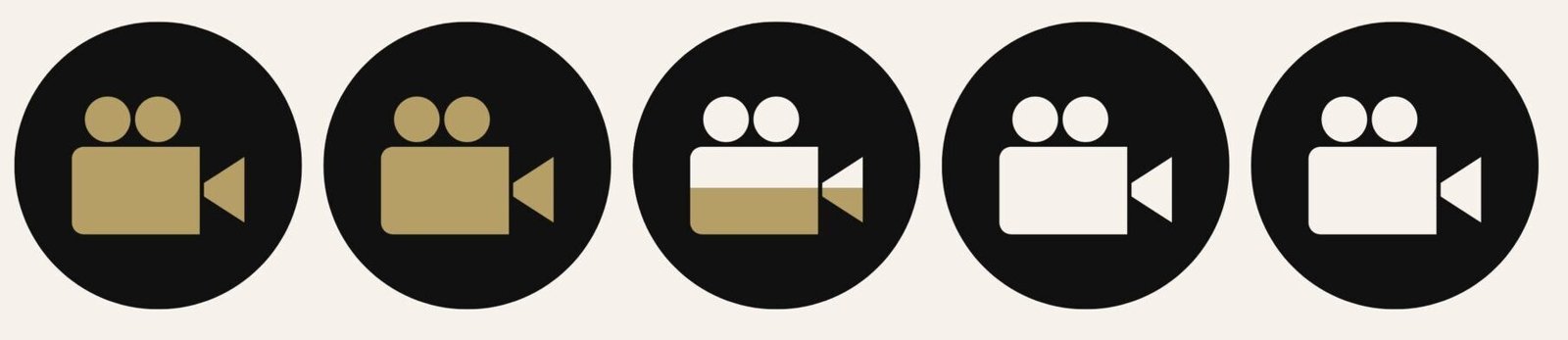
After revisiting the first film, which I rated 3.5 Reels out of 5, the gap between them felt even more pronounced. The original balanced sharp humor, memorable performances, and themes of ambition and identity with remarkable ease. This sequel spends too much of its time looking backward. The relationships rarely develop in ways that feel convincing, and too many scenes are built around revisiting familiar patterns instead of pushing the story somewhere new. There are a few clever visual rhymes, like Andy wiping the mirror in both openings, but touches like that can only do so much. If these characters are returning after all this time, their lives should feel shaped by it. Instead, I was left wondering what this continuation truly adds.
It Never Quite Finds Its Runway
The film’s biggest weakness is its pacing and lack of focus. Where the first movie moved with confidence and precision, this one wanders between plotlines without ever settling into a strong rhythm. Its most promising idea, the decline of traditional journalism and the changing media landscape, should have given the story weight and urgency. Instead, the script skims the surface and keeps drifting into detours that dilute its impact.
Scenes run long, emotional beats fail to register, and the film never quite comes together. The comedy is also noticeably less effortless. What once felt quick, cutting, and character-driven now feels carefully assembled, as if the film is trying to imitate a tone it no longer instinctively understands.
The Missing Edge of Miranda Priestly
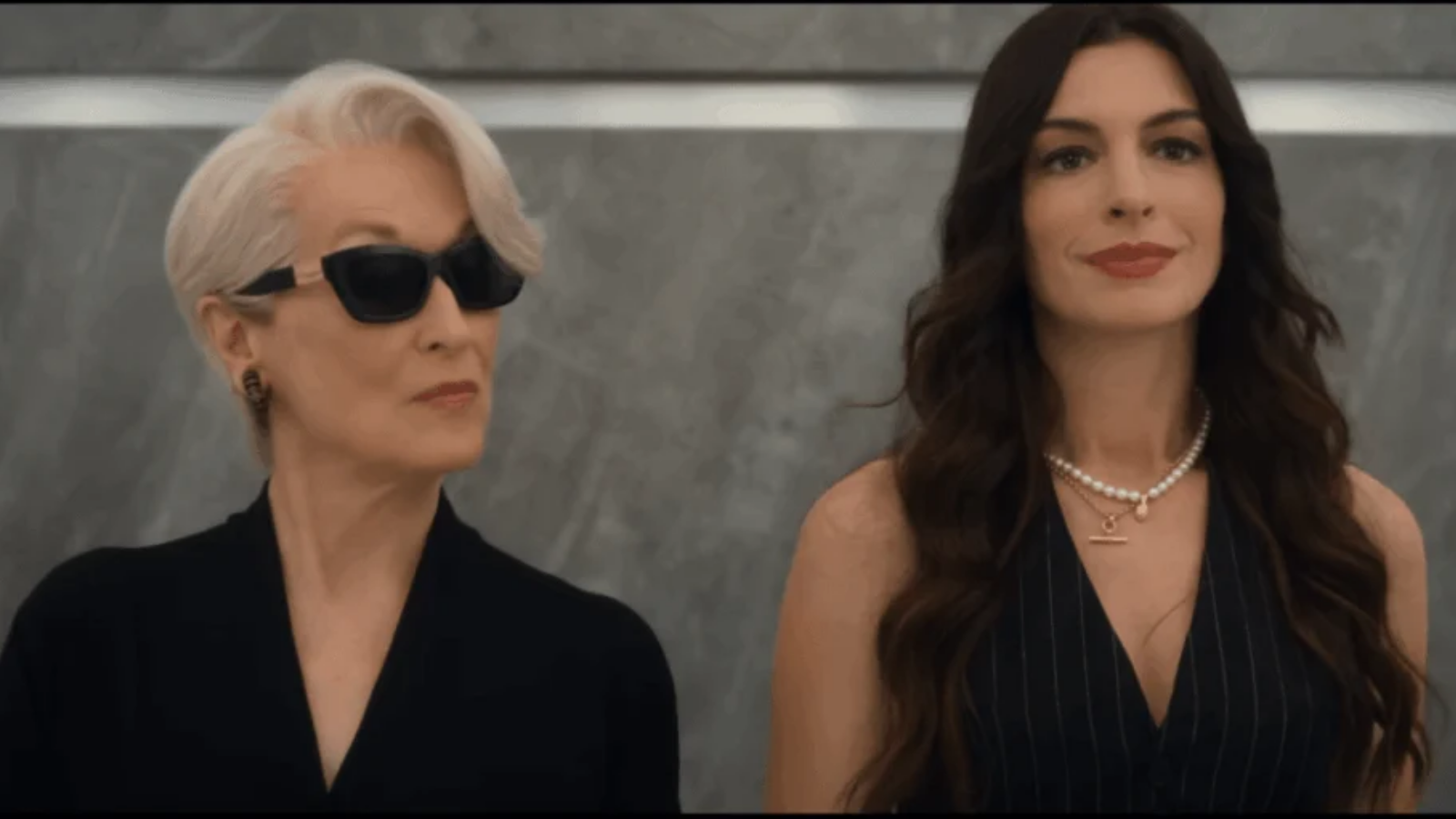
One of the sequel’s clearest missteps is how much it softens Miranda Priestly. Meryl Streep still delivers flashes of the authority that made the character unforgettable, but the steel, severity, and quiet menace that once defined her have been noticeably reduced. I understand the film’s intention. It is tracing the decline of Runway, which has always functioned as Miranda’s kingdom. But in sanding down her edges, it also weakens one of the story’s strongest sources of tension.
Much of the film follows Miranda as she adjusts to a world where the old Runway sensibility no longer commands the same fear or obedience. That is an interesting direction in theory, but it comes at a cost. The qualities that once made her so arresting are muted in the process.
Ironically, some of the film’s strongest laughs come from watching Miranda navigate a more HR-conscious era. Seeing someone who once dominated every room forced into self-awareness, even to the point of hanging up her own coat, does generate a few genuinely funny beats. Still, I missed the colder, sharper Miranda whose presence gave the first film so much of its electricity.
Anne Hathaway Carries the Film
Hathaway gives the sequel’s strongest performance and carries much of its emotional weight. Because the film is so firmly anchored to Andy, Hathaway is given the richest material, especially as the story brushes against journalism’s place in a digital-first culture.
I also found myself wanting much more from the Andy and Emily dynamic. Hathaway and Emily Blunt share the film’s most alive scenes, and their chemistry comes closest to recapturing the spark that made the first movie so entertaining. Blunt still lands several sharp lines, but the script never gives her enough room to dominate the way Emily once did.
That same issue extends to the rest of the returning cast. Stanley Tucci’s Nigel still brings warmth and wit whenever he appears, but he is used so sparingly that his scenes mostly serve as reminders of what the film is missing elsewhere. Overall, the ensemble remains appealing, but the sequel never fully capitalizes on the chemistry that made these characters endure.
The New Characters Fall Flat
Despite several major additions, the new characters leave surprisingly little impression. Kenneth Branagh feels oddly detached from the rest of the film, and his role mostly functions as a crutch to reassure the audience that Miranda is still lovable rather than as a fully realized character in his own right. Lucy Liu and Justin Theroux’s billionaire exes may be central to the story on paper, but the writing never gives their conflict enough texture to make it especially engaging.
Theroux’s role also seems intended to inject more comic energy than it actually delivers. Much of that material depends on eccentric billionaire behavior that rarely lands, leaving the subplot more functional than memorable.
For a film with three Oscar winners and two Oscar nominees in the cast, the lack of stronger new dynamics is especially disappointing. There is more than enough talent here to create memorable additions to this world, yet most of the fresh faces fade quickly, leaving the returning cast to do almost all of the heavy lifting.
🧠ADHD Watch Factor
Pacing: Uneven – Slow stretches hurt momentum
Attention Hold: Drifting – Humorous scenes pull you back in
Emotional Pull: Subtle – Never lands emotionally
Chaos Level: Mild – More restrained than energetic
Fashion Fans Will Still Find Moments to Enjoy
Even with its storytelling problems, fashion remains one of the sequel’s strongest assets. The wardrobe and celebrity cameos help carry stretches where the story feels less focused.
Donatella Versace’s appearance during one of Emily Blunt’s scenes is an easy standout. It also shows how enjoyable the film can be when it stops straining and simply lets the cast’s chemistry take over.
Some of the jokes and visual references also land better if the first film is fresh in your mind. For that reason, I would recommend revisiting The Devil Wears Prada before watching this sequel.
Final Thoughts
The Devil Wears Prada 2 is not a failure, but it does fall into a familiar trap. Like many belated sequels, it returns to a beloved property without discovering enough that feels artistically or emotionally necessary. The cast, the fashion, and a handful of sharp scenes keep it watchable, but the film never makes a compelling case for why this story needed to be told now.
In the end, this feels more like a streaming-night curiosity than an essential theatrical experience. Fans of the first film will still find things to enjoy, particularly in the returning cast and the fashion-world touches, but I left wishing this sequel had made a stronger case for its own existence.
Awards Outlook (1)
Original Song: “Shape of a Woman” (Lady Gaga) – Gaga’s awards history and the song’s visibility make this one worth watching.
Unfortunately, it will not repeat the awards success of the original, which received two Oscar nominations, including Costume Design. While costume designer Molly Rogers delivers strong looks throughout, the fashion never reaches the iconic and culturally defining level Patricia Field established in the original.
Where to Watch