
“Wuthering Heights (2026)”
Spoiler-Free Review
June 16, 2026 | Lisa Hatzenbeller

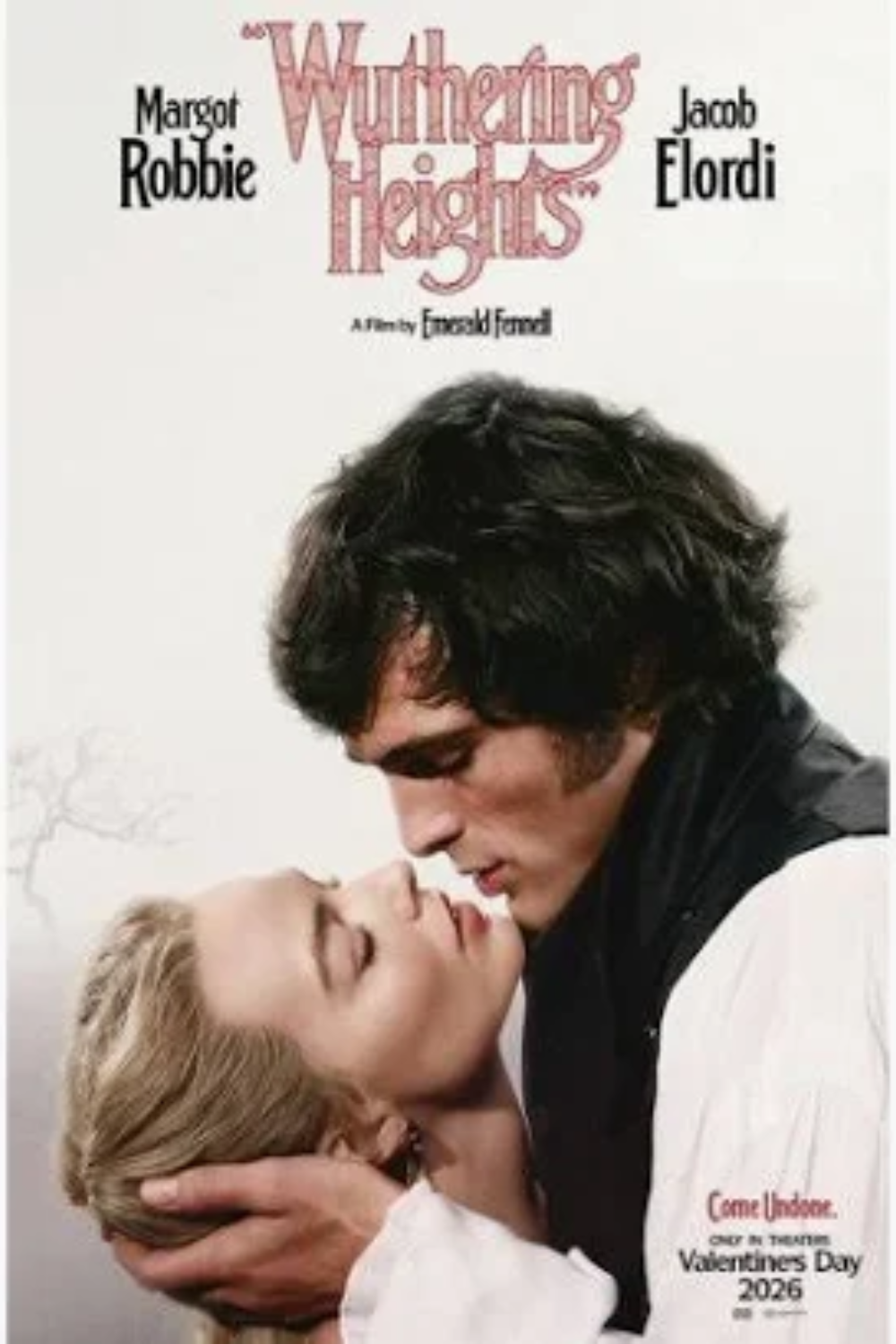
Premise: A passionate and tumultuous love story set against the backdrop of the Yorkshire moors, exploring the intense and destructive relationship between Heathcliff and Catherine Earnshaw.
Genres: Drama and Romance
Runtime: 136 minutes
MPAA Rating: R
Release Year: 2026
Starring: Hung Chau, Owen Cooper, Jacob Elordi, and Margot Robbie
Directed by: Emerald Fennell
Written by: Screenplay by Emerald Fennell
Based on: Novel Wuthering Heights by Emily Brontë
Distributed by: Warner Bros.
Emerald Fennell’s adaptation of Emily Brontë’s 1847 novel, Wuthering Heights, arrives with a difficult task: reinterpret one of literature’s most iconic relationships while convincing audiences they still need another take on a story that has already been adapted countless times. Honestly, she may have found the sharpest way in. Rather than competing with previous versions, she reimagines the material from a completely different angle.
Some stories arrive carrying expectations. Fennell pushes directly against the romantic mythology surrounding Catherine and Heathcliff and reframes their story through obsession, sensuality, emotional extremity, and the discomfort that emerges when love becomes tangled with identity and destruction.
Whether that reads as exhilarating or exhausting will probably determine how much it works for you. Ultimately, the question is not whether Fennell is faithful to Brontë. It is whether her version leaves a mark.
This Is Not the Romance People Think It Is
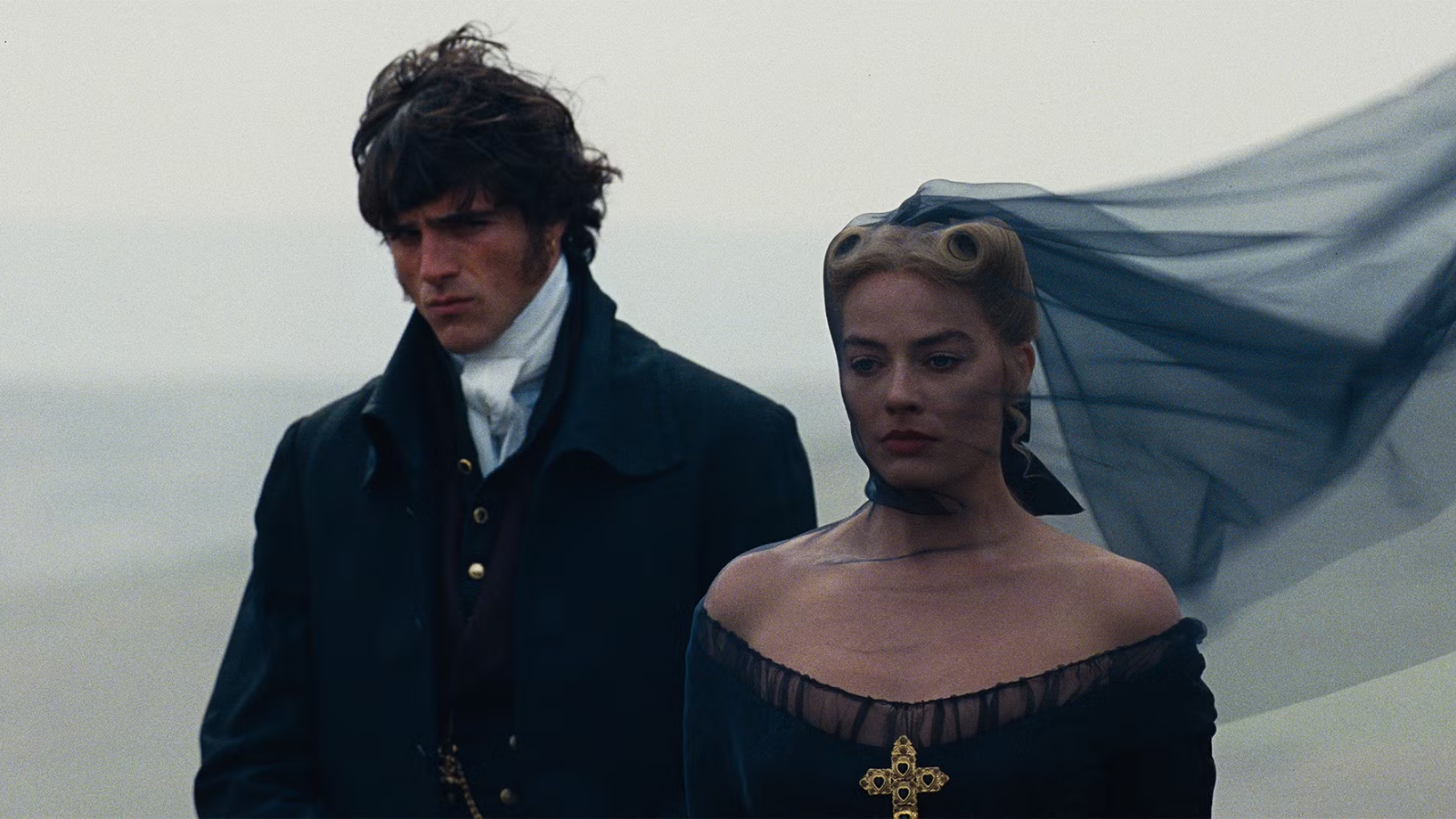
One of Fennell’s boldest choices is that she never seems particularly interested in convincing us that Catherine and Heathcliff are one of literature’s great love stories. Instead, she treats their relationship as something far messier and more uncomfortable, asking why audiences continue to romanticize characters who repeatedly hurt themselves and everyone around them.
That shift becomes one of the strongest parts of her reading of the material. Rather than treating the story as a traditional romance, she filters it through obsession, class, trauma, and emotional dependency. Love still exists between Catherine and Heathcliff, but it is tangled with resentment, longing, identity, and the desire to be completely understood by another person. Their connection becomes less about finding happiness together and more about what happens when another person starts defining the shape of your own selfhood.
When that interpretation works, it gives the material a sharp and contemporary perspective on a story that has existed for generations. But there are moments when the commitment to rejecting romantic framing flattens some of the tenderness beneath it. If every emotion is driven toward obsession, there is little space left for quieter contradictions to settle in. Shock only matters if heartbreak survives beside it.
Margot Robbie and Jacob Elordi Understand the Assignment
Going in, I expected chemistry. You cast Margot Robbie and Jacob Elordi together and there is a natural expectation that sparks are going to fly. Watching Catherine and Heathcliff grow up together only reinforces that expectation because their childhood connection becomes the emotional foundation for everything that follows.
Robbie’s Catherine comes across less like a woman trapped by society and more like someone trapped by herself. There is a sharpness to her performance that refuses to make Catherine easy to love, which works for a character defined by impulse, contradiction, and self-sabotage. Elordi plays Heathcliff with more restraint, resisting the temptation to turn him into a mythic romantic figure and finding his strongest moments in silence and stillness.
Together, they create a charged connection, but not always an emotionally convincing one. There is passion between them, and both actors commit to Fennell’s heightened vision, yet I never felt the pull I expected from Catherine and Heathcliff. Their bond kept me at a remove, and I found myself admiring the performances more than surrendering to the relationship.
That tension seems intentional, even if it kept me at a distance. Robbie and Elordi understand exactly what is being asked of them, but the film leaves little room for softness. Their performances are strong, yet the constant emotional extremity occasionally makes the relationship register as more performed than deeply lived in.
The Craft Is Stunning, Even When It Overindulges
One of the places where Fennell’s vision feels most complete is in the way the visual and audio choices extend the emotional world of the characters. Nothing here seems accidental. Nearly every creative decision is designed to make desire, confinement, longing, and obsession register physically.
Cinematographer Linus Sandgren gives the imagery a richness that makes everything seem sensual and tactile while creating an atmosphere that occasionally borders on suffocating. Production designer Suzie Davies extends that sensation into the spaces themselves, most notably through Catherine’s interiors, including the striking flesh-colored bedroom walls set to resemble her skin, complete with veins and a mole. That detail makes the room intimate, uncomfortable, and strangely alive. Rather than functioning as beautiful period decoration, the space becomes psychological, reinforcing the idea that identity and desire are becoming impossible to separate.
Costume designer Jacqueline Durran works in conversation with those choices. Catherine’s wardrobe evolves through increasingly elaborate silhouettes, dramatic textures, and statement gowns that emphasize status, longing, and performance while reflecting the distance growing between who she is and who she believes she needs to become. The costumes feel expressive rather than ornamental, helping turn appearance into another layer of storytelling.
Music also becomes a major part of the experience. Composer Anthony Willis pushes emotion to the surface rather than letting the score fade into the background, creating moments that occasionally feel almost operatic in scale. The original songs from Charli XCX could have felt distracting against the nineteenth-century setting, but they fit surprisingly well by connecting repression and desire to a more contemporary emotional language.
The supporting cast also leaves an impression without competing for attention. Hong Chau brings a calm observational quality to Nelly that helps balance some of the emotional excess, while Alison Oliver leaves an impression as Isabella. Her performance finds both humor and sadness in a character who becomes caught in the fallout of someone else’s all-consuming relationship.
🧠ADHD Watch Factor
Pacing: Uneven – Strong start, repetitive late stretch
Attention Hold: High – Constant visual and audio stimulation
Emotional Pull: Distant – Admired more than emotionally felt
Chaos Level: Full – Tumultuous love, obsession, emotional overload
Where this intensity becomes more uneven is that so many creative elements are operating at maximum volume that eventually some of the impact starts to blur together. The cinematography, production design, score, sensuality, and heightened emotion are all pushing toward the same effect, and after a while the experience becomes more overwhelming than immersive. The ambition never disappears, but there were moments where I wanted less escalation and more room to sit with what the characters were actually experiencing.
Final Verdict
For all its excess, I would rather see a messy, specific interpretation than a safe adaptation with nothing new to say. Fennell clearly has a point of view, and even when the execution becomes too much, there is something compelling about watching her push this story into stranger, more uncomfortable territory.
This was never trying to give us the final word on Brontë’s story. It is messy, excessive, and unmistakably specific, which makes it more provocative to discuss than it is easy to surrender to.
There is a lot to appreciate, from the performances to the visual confidence and sheer commitment behind every creative choice. But by the end, I found myself admiring the film’s decisions more than absorbing their impact. Stories survive because each generation breaks them differently, and while I respected the boldness of this version, I never quite connected with the ache underneath it.
Awards Outlook (2)
Original Score: Anthony Willis – Sweeping, emotionally heightened score becomes essential to shaping the atmosphere and emotional core. The music amplifies longing, desire, and tension throughout.
Original Song: “House” by Charli XCX feat. John Cale – Of the eight original songs Charli XCX contributed, this feels like the strongest contender. The spoken-word element helps distinguish it from the rest of the lineup while giving it a more memorable identity.
Where to Watch


What did you think of “Wuthering Heights”?
Did Fennell’s approach work for you, or did the emotional intensity get in the way of the heartbreak? I want to hear your take.
Comment or tag me on X. Thoughts on Instagram.
Follow Oscar Obsessed ADHD
For data, chaos, and heart in every award season.
YouTube | Instagram | X