
“Sorry, Baby”
Spoiler-Free Review
May 19, 2026 | Lisa Hatzenbeller


Premise: After a tragic event, a woman finds herself alone while everyone else continues with their lives as if nothing had happened.
Genres: Comedy and Drama
Runtime: 103 minutes
MPAA Rating: R
Release Year: 2025
Starring: Eva Victor, Naomi Ackie, and Lucas Hedges
Directed by: Eva Victor
Written by: Eva Victor
Distributed by: A24
There are films centered around a traumatic event, and then there are films like Sorry, Baby that are far more interested in how a person learns to live alongside what happened afterward.
What makes Sorry, Baby so emotionally effective is that the story never becomes consumed by “the event” itself. Instead, the film focuses on the emotional residue left behind and the quiet ways people attempt to keep moving forward after life changes them. Through restrained storytelling, intimate performances, and deeply human conversations, the film explores grief, friendship, trauma, and the uneven reality of healing in ways that feel painfully honest.
A Story About Living With the Aftermath
Sorry, Baby is broken into different acts as it tells Agnes’ story across multiple stages of her life, allowing the audience to understand both who she was before the event and how it continues affecting her relationships, routines, and sense of self over time. Rather than building toward dramatic emotional explosions, the film relies on restrained storytelling, quiet imagery, and deeply human conversations to communicate its emotional weight.
Trauma does not always announce itself loudly. Sometimes it exists in awkward silences, small routines, disconnected moments, or the feeling that everyone else somehow kept moving while part of you stayed stuck in place. That emotional honesty gives Agnes a grounded authenticity that makes her feel less like a fictional character and more like someone we may know in real life.
Eva Victor’s Impressive Writing and Directorial Debut
It is difficult to believe this is Eva Victor’s first feature film as a writer and director. Not only does she confidently balance the film’s emotional heaviness with subtle humor, but she also delivers a vulnerable lead performance that never feels exaggerated or emotionally manipulative.
There is a natural rhythm to the dialogue throughout Sorry, Baby that makes the relationships feel lived-in rather than scripted. Victor allows scenes to breathe instead of constantly forcing emotional payoff, which ultimately makes the film’s quieter moments land even harder. As a debut feature, it is an incredibly confident introduction to Victor as a filmmaker.
Friendship Becomes the Film’s Emotional Core
While Sorry, Baby explores trauma and healing, the heart of the film ultimately becomes the friendship between Agnes and Lydia. Their relationship evolves throughout different stages of Agnes’ life and captures what it truly means to support someone when there is no perfect thing to say or do.
One of the film’s simplest exchanges quietly becomes one of its most meaningful. Agnes shows up with a cat – yes, the now-infamous cat from the poster that had half the internet searching “does the cat die?” before seeing the movie – and says, “I got a cat.” Lydia simply responds, “Whatever you need.”
It is such a small moment, but it perfectly captures the emotional language of the film. Sometimes support is not about fixing someone. Sometimes it is simply about staying present and allowing them to cope however they need to.
And for anyone worried beforehand like I was: no, the cat does not die.
Quiet Moments Leave the Biggest Impact
What makes Sorry, Baby stand apart from many trauma-centered dramas is that it never feels interested in turning pain into spectacle. The film is not asking the audience for sympathy points, nor does it attempt to wrap healing into a clean inspirational narrative.
Instead, the story understands that recovery is often messy, nonlinear, awkward, and deeply personal.
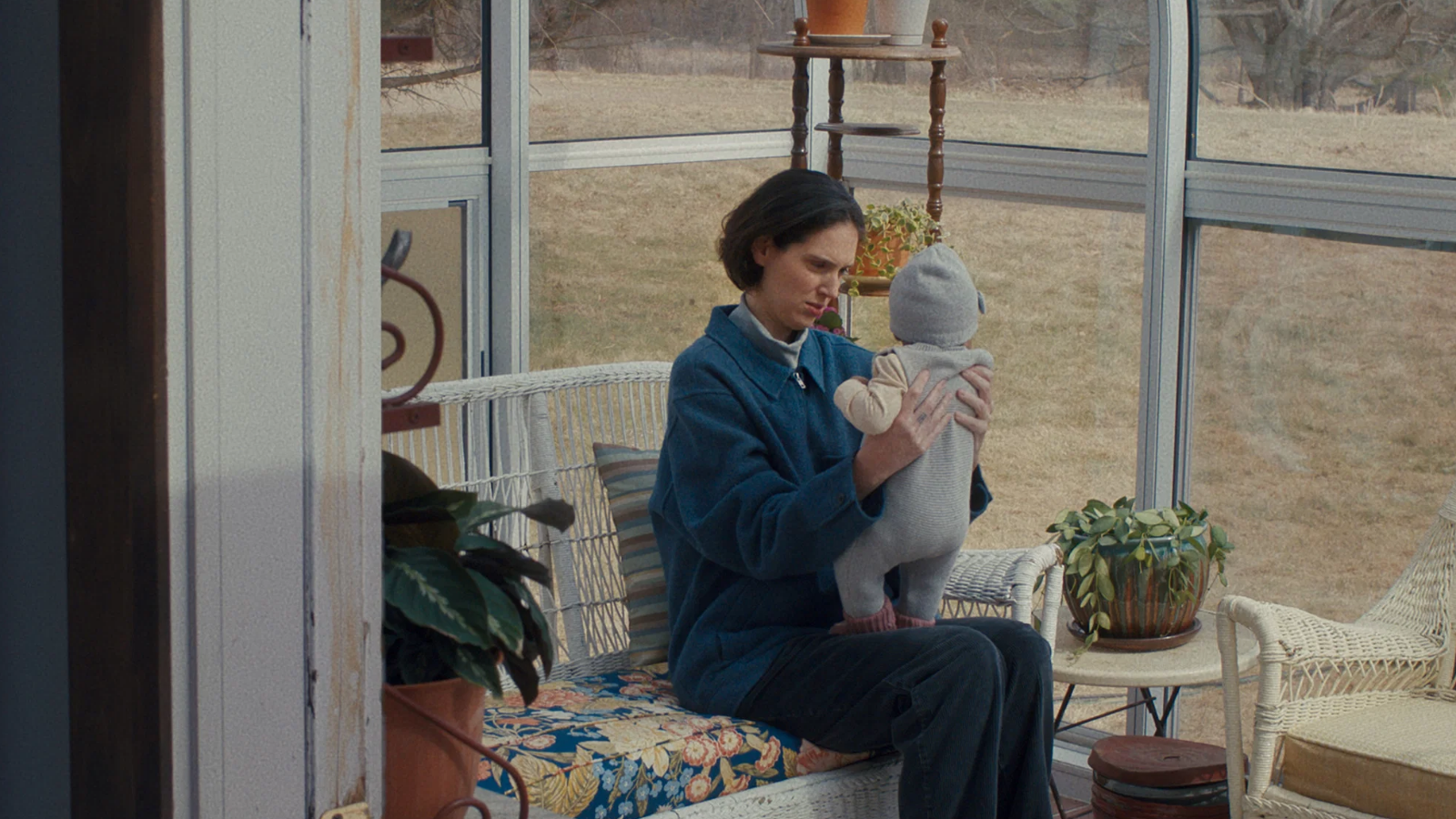
The film’s most beautiful scene comes near the end during a conversation involving a baby – a quiet moment that gently brings together the film’s larger themes about pain, connection, and continuing forward even after life permanently changes you. It is not a scene built around dramatic speeches or emotional manipulation. Its power comes from how honest it feels.
Its quiet emotional weight continues settling in even after the film ends.
🧠ADHD Watch Factor
Pacing: Slow-Burn – Quiet, reflective, intentionally patient
Attention Hold: Consistent – Natural dialogue keeps you locked in
Emotional Pull: Lingering – Hits harder the longer it sits
Chaos Level: Controlled – Emotionally heavy without becoming overwhelming
Final Thoughts
Sorry, Baby embraces many of the qualities associated with the A24 indie spirit, but Eva Victor’s emotionally observant storytelling helps the film stand apart from more conventional trauma dramas. By focusing less on the event itself and more on the emotional aftermath left behind, the film delivers an intimate and deeply human portrait of grief, friendship, and survival.
It is quiet, uncomfortable, funny, painful, and ultimately compassionate in ways that feel painfully real.
Awards History
Critics Choice Awards
• Original Screenplay Nominee – Eva Victor
Golden Globes
• Best Actress in a Drama Nominee – Eva Victor
Cannes
• Directors’ Fortnight Audience Award Nominee
• Caméra d’Or Nominee
• Queer Palm Nominee
Sundance
• Grand Jury Prize Nominee
• Waldo Salt Screenwriting Award: U.S. Dramatic Winner
Directors Guild of America
• Outstanding Directorial Achievement in First-Time Theatrical Feature Film Nominee
National Board of Review
• Best Directorial Debut Winner
• Top Ten Independent Films
Film Independent Spirit Awards
• Best Feature Nominee
• Best Director Nominee
• Best Screenplay Winner
• Best Supporting Performance Winner – Naomi Ackie
Where to Watch